
The Next Phase of Agents: Building the Infrastructure for Enterprise AI in China
Z Potentials examines local deployment, costs, enterprise data, SAG, Zleap-Agent, and collaboration between enterprise agents through Zleap’s approach.

01 | Agents are targeting payroll, beyond software budgets
The decisive AI market may ultimately lie outside consumer applications. Over the past two years, countless “personal assistant” products have competed for user traffic, recalling the intense competition of the early mobile internet.
One clear signal is that model companies such as OpenAI and Anthropic are shifting attention toward enterprise agents. OpenAI has made enterprise AI a focus of its next stage, emphasizing agents in company-wide workflows. Anthropic is introducing knowledge-work agents for finance, legal, sales, accounting, and other business functions. The next phase increasingly concerns enterprise adoption.
Both companies are also strengthening teams of forward-deployed engineers, or FDEs. These engineers go directly into customer organizations to embed model capabilities in real business systems. OpenAI describes its FDE work as turning research breakthroughs into production systems. Anthropic emphasizes embedding with strategic customers to deliver AI applications that solve concrete business problems.
This reflects an important change: agent value emerges inside complex, specific, difficult-to-standardize enterprise workflows, beyond the API call itself.
Enterprise AI and the previous generation of SaaS have different economics. SaaS assists people. CRM, ERP, and dashboards improve efficiency, but still depend on people to operate, judge, and execute. Its ceiling is therefore related to enterprise software budgets. A global SaaS market worth hundreds of billions of dollars is large, but remains only part of IT spending.
When AI starts handling standardized work in customer service, sales, operations, finance, development, investment research, legal, and management analysis, its market extends to a global payroll measured in tens of trillions of dollars.
That is why investors evaluating AI applications increasingly look beyond user counts to whether a product enters real workflows, substitutes for labor, and establishes sustainable business operations.
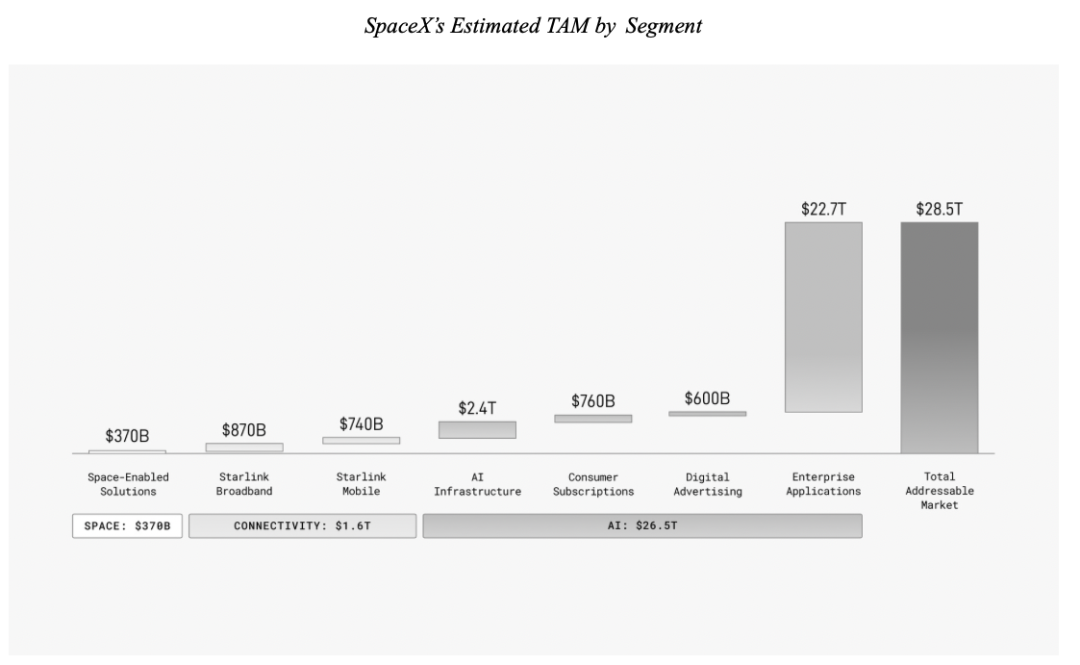
SpaceX's prospectus estimates a $22.7 trillion enterprise AI application market.
The next phase will therefore increasingly focus on businesses. But enterprise agent deployment will take multiple forms. The United States naturally gravitates toward centralized data centers, very large models, and cloud SaaS. In China, companies place stronger demands on security, private deployment, cost control, and supply-chain autonomy. Many smaller businesses cannot continuously outsource all internal workflows to expensive cloud models.
China may need an enterprise AI ecosystem adapted to these conditions. Zleap's answer is a compact appliance, local compute, local data, local agents, and coordinated local-cloud processing.
02 | Enterprise AI in China may follow a different path
Enterprise agents offer a major opportunity. How should they be deployed in China?
The US model places powerful models in the cloud and consolidates workflows there. It offers strong models, fast iteration, and a mature ecosystem. Large multinationals and cloud-native companies can smoothly connect agents to Salesforce, Slack, Microsoft 365, GitHub, Snowflake, and similar systems.
Chinese companies face different constraints.
First, data cannot easily leave the company. Code, customer information, contracts, meetings, financial records, supply chains, sales leads, and internal communications are core business assets. In many sectors, moving them beyond the internal network is a compliance and operational concern.
Second, token costs cannot grow without limit. Enterprise agents may operate around the clock, continuously reading data, analyzing anomalies, generating content, and following up on tasks. If every action relies on cloud models, costs grow with company size, data volume, and agent count.
Third, companies need a controllable supply chain. Models, compute, data, deployment, permissions, and auditing cannot depend entirely on one overseas cloud ecosystem. Once agents enter production systems, they become part of digital infrastructure.
This explains Zleap's compact appliance approach.
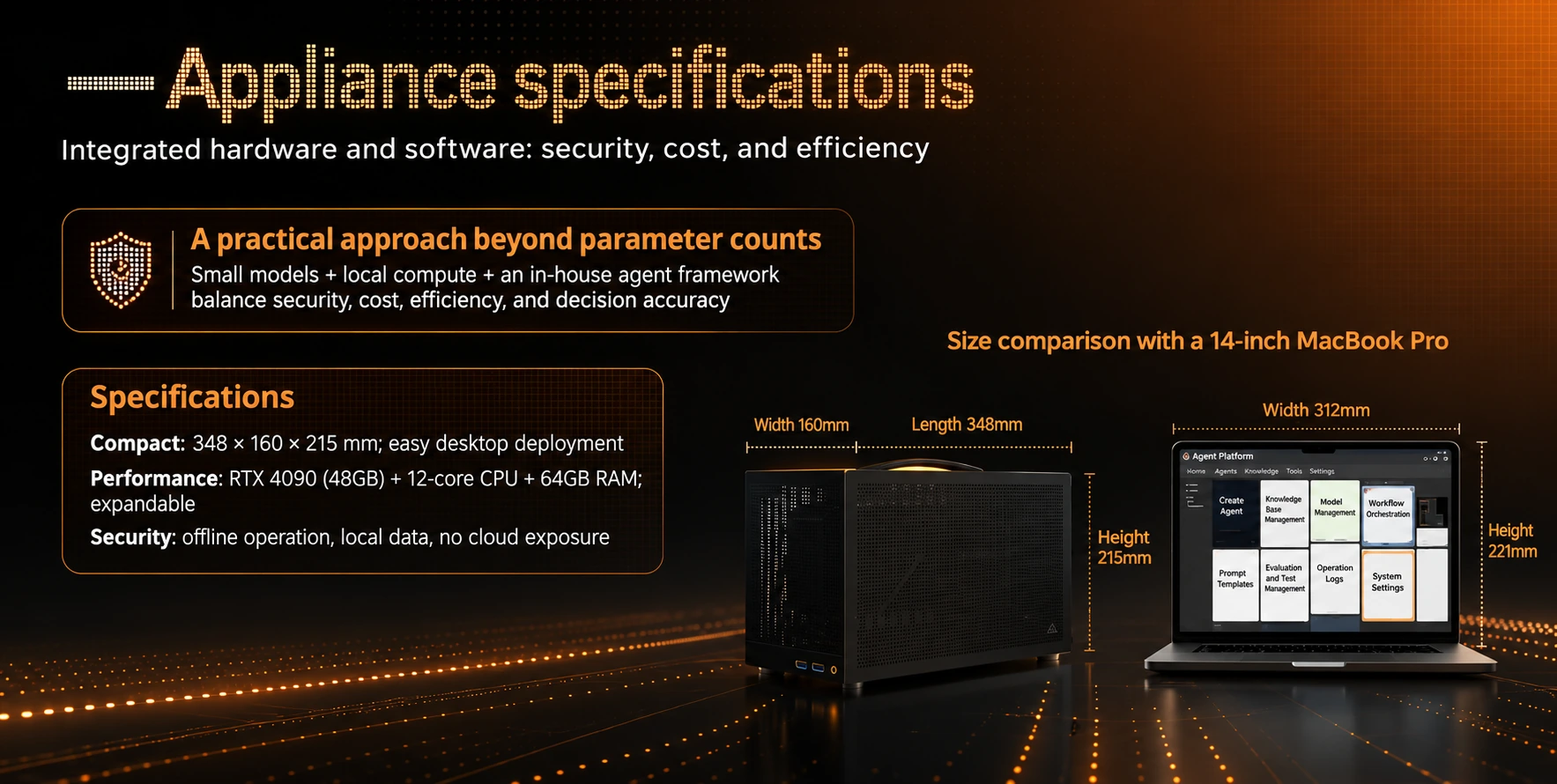
Zleap appliance introduction.
The company aims to define an enterprise AI entry point: a single-GPU, locally deployed agent appliance costing under RMB 100,000. Amortized monthly, the cost is less than RMB 10,000. It addresses repetitive, standardized, automatable information processing across multiple roles.
Companies can compare that with the fully loaded monthly cost of customer service, operations, assistants, document management, or project follow-up. The value extends beyond replacing one worker to providing a group of digital workers that process context continuously and collaborate within permissions.
Compute and data stay local. Companies do not need to continuously upload meetings, code, customer data, finance, and project progress, or depend entirely on one cloud provider's prices, limits, policies, and reliability. Local small models can handle routine tasks and private data, while more powerful cloud models handle complex reasoning, multimodal work, and long workflows.
This engineering path fits the constraints of Chinese businesses. Where the US approach emphasizes powerful models and centralized clouds, local deployment, affordability, control, security, and local-cloud coordination may matter more in China. Zleap is an early example.
03 | Moving models locally is only the beginning
The appliance's external form is clear: local compute, data, and deployment. The difficulty is making it useful beyond running an open model behind a chat interface.
Small local models have limitations in reasoning, context length, and complex tool use. Companies will not accept local AI that is secure but ineffective.
Zleap has therefore researched how limited local compute can support small models with good data, focused context, and a reliable runtime. That led to SAG and Zleap-Agent.
SAG addresses data. Valuable enterprise information often consists of raw records scattered across meetings, code, customer conversations, financial systems, and project tools, rather than polished knowledge bases.
Traditional RAG chunks documents, searches vectors, and supplies similar passages to a model. This suits simple questions but falls short for agents working over long periods.
Agents need relationships: which information changes an earlier state, which meeting revealed a project risk, and which customer feedback influenced a product decision. SAG organizes source data into events and entities. Events preserve complete meaning; entities index connections. A lightweight hypergraph structure supports multi-hop evidence retrieval without a heavy global knowledge graph or fragmented triples.
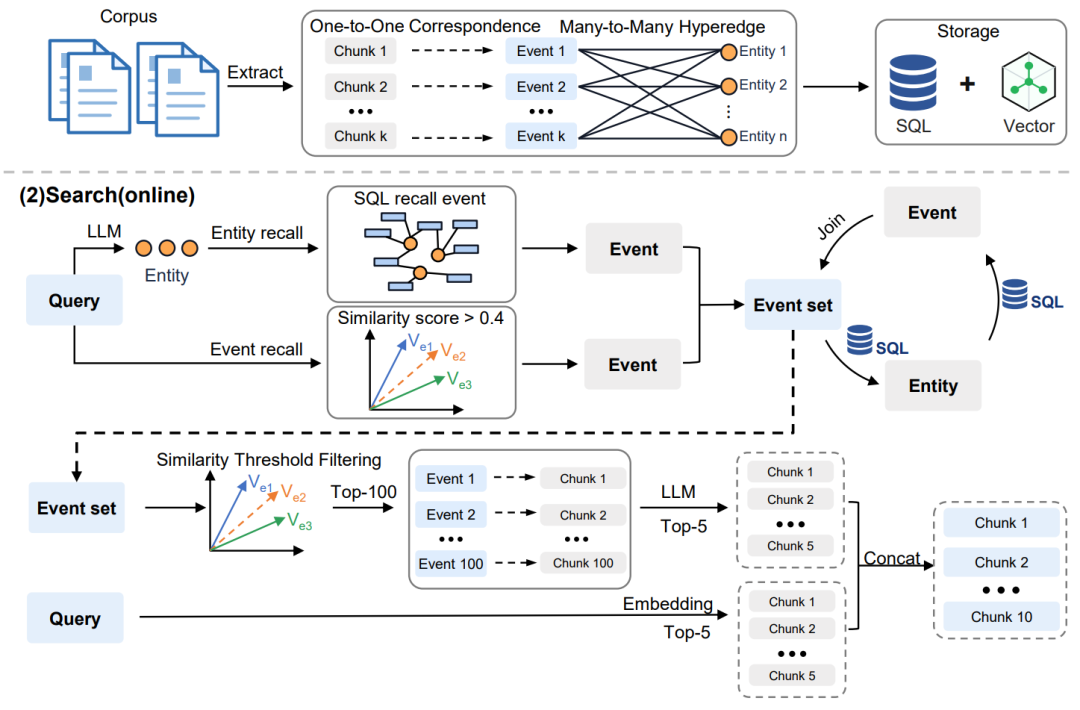
Excerpt from the SAG paper.
Under the same embedding and LLM configuration, the paper reports that SAG outperformed HippoRAG 2 on HotpotQA, 2WikiMultiHop, and MuSiQue. Average Recall@2 was 79.30% for SAG and 68.14% for HippoRAG 2. On MuSiQue, Recall@5 was 80.04% and 65.13%, respectively.
The significance extends beyond higher scores. HippoRAG 2 showed the importance of structured memory and multi-hop retrieval. SAG suggests that the next step can use lighter, incrementally writable structures to turn enterprise data into useful agent context.
This matters for appliances. Small local models cannot read unlimited material. Before inference, the system must supply less data with greater accuracy and stronger relevance.
Above the data foundation, Zleap-Agent addresses the runtime through an in-house agent harness.
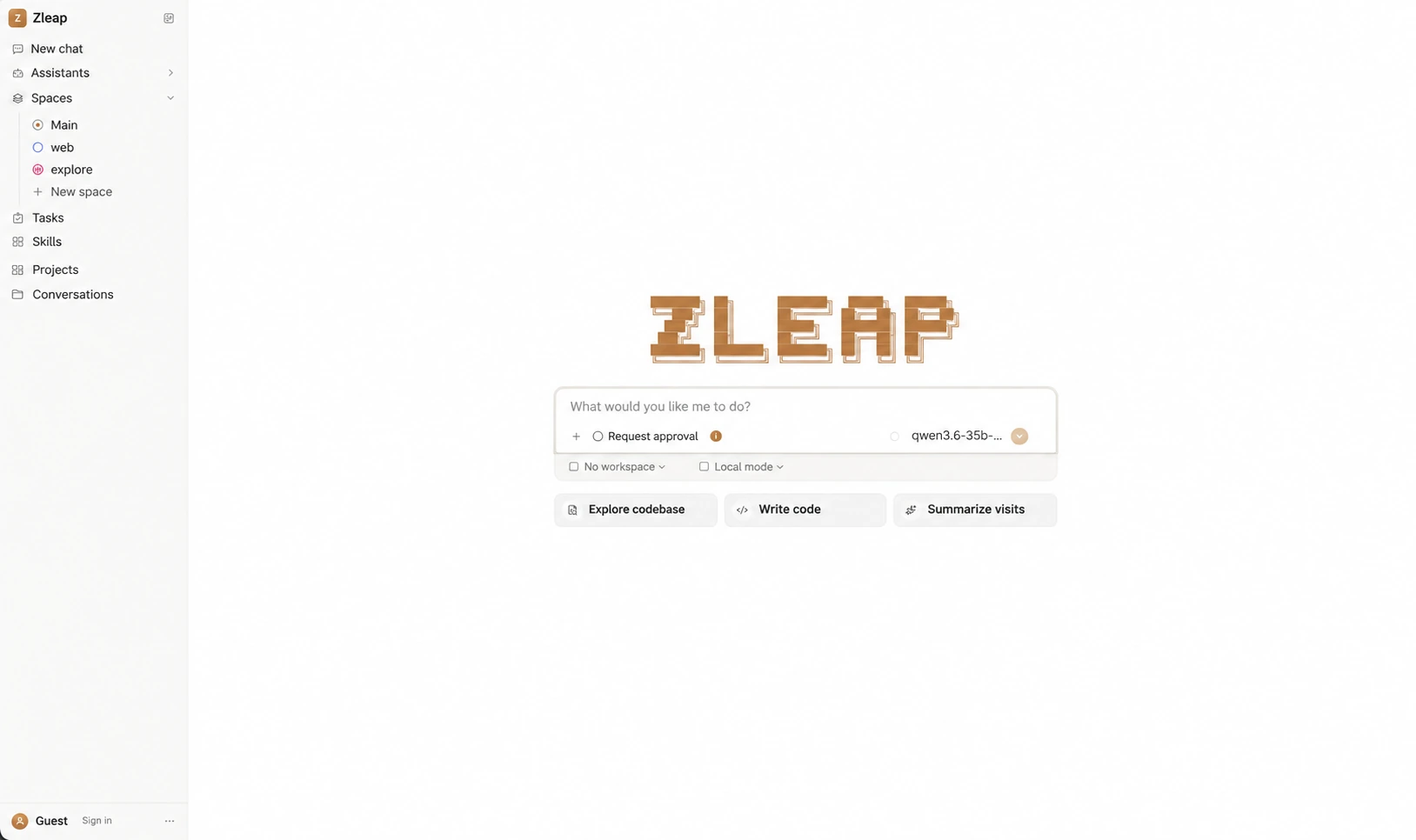
The open-source Zleap-Agent interface.
Many agent frameworks assume a sufficiently capable model can filter all tools, memories, history, and rules placed into its context. For small local models, adding everything often creates noise.
Zleap-Agent introduces workspaces at the harness layer, effectively providing sparse attention at the agent level. In a sales workspace, the agent sees customers, contracts, follow-up records, and sales tools. In finance, it sees budgets, invoices, approval rules, and financial memory. In development, it sees code, tasks, defects, and release history. It need not see every tool and memory at every step.
Like sparse attention within a model, this limits processing to context relevant to the current situation.
The design reduces wasted context, tool misuse, and interference between memories. Workspaces can also use different models: local models for routine tasks, strong cloud models for complex work, and multimodal models for visual tasks.
Zleap-Agent also makes memory a native runtime capability through SAG, rather than an external vector database.
Enterprise memory includes personal preferences, project status, customer progress, departmental experience, past decisions, and permission boundaries. These require partitioning. Each workspace retains its own working memory: customer context in sales, budgets and approvals in finance, and code, tasks, and releases in development.
Agents can then accumulate organizational experience over time while reducing memory contamination across users, departments, and scenarios.
SAG and Zleap-Agent jointly address the appliance's central challenge: making agents useful within severely limited local resources.
04 | What happens when every company has local agents?
As a product, Zleap delivers a device. As infrastructure, it aims to provide an operating system for agents inside the enterprise.
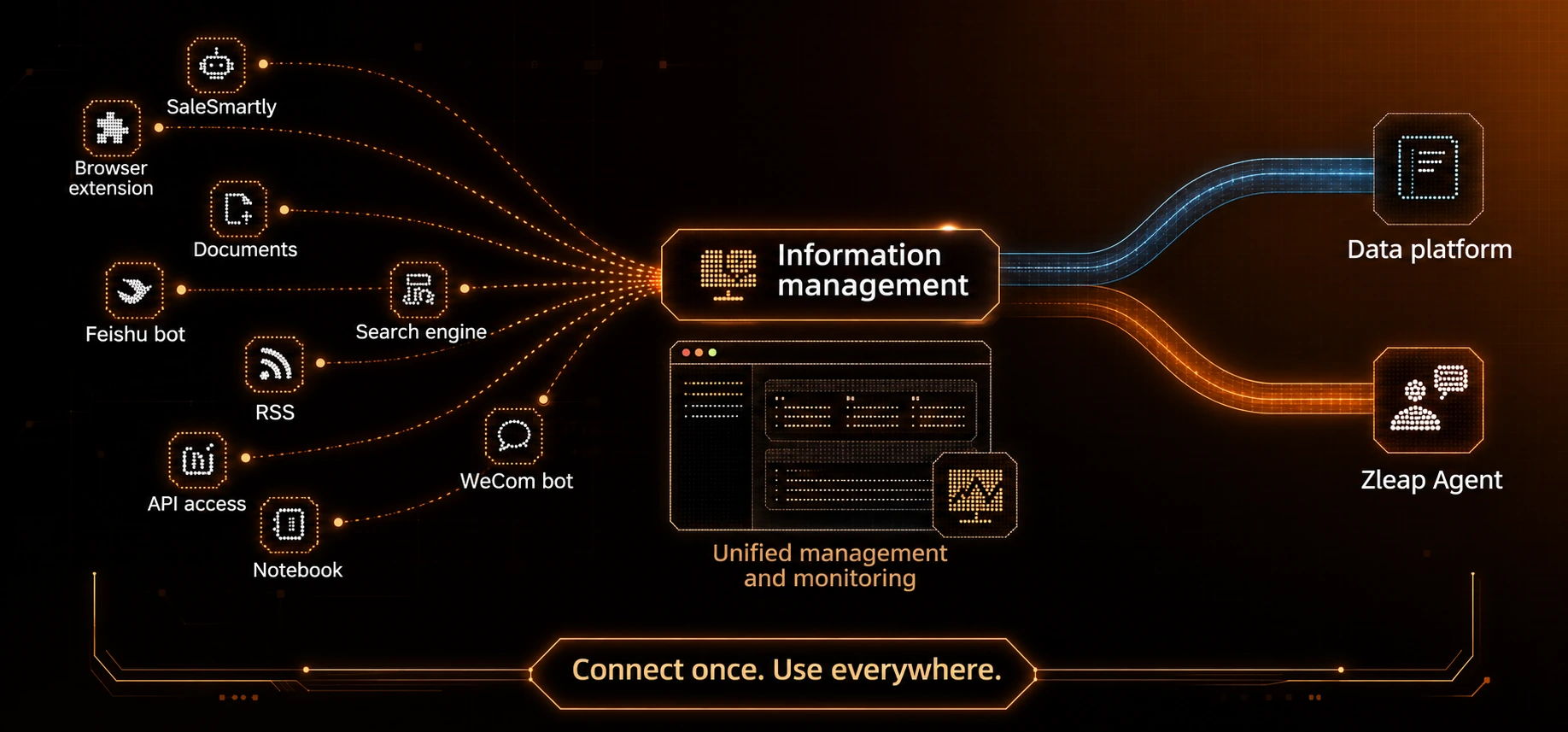
Overview of the Zleap enterprise system.
The system has roughly three layers.
First: local data and local agents. The appliance connects meetings, code, customer systems, finance, project management, internal documents, and other business data. SAG structures this information into reliable context. Zleap-Agent partitions tools, memory, permissions, and models by workspace. The company then has agents capable of working continuously inside internal systems, beyond a chatbot.
Second: an agent information feed. Proactive agents observe, analyze, and produce judgments in the background. Companies need a common collaboration interface rather than scattered logs.
This feed is an interface for managing groups of agents. Project risks, customer changes, business opportunities, anomaly alerts, and intermediate results become information units that people can browse, comment on, question, and continue working with. They are delivered to the appropriate recipients. Work once required people to synchronize information can be automated.
Third: a local network of agents. With a local data foundation, native memory, workspaces, and a shared feed, agents can form an internal collaboration network. Sales, finance, development, operations, executive, project, and customer agents work under different permissions and within different workspaces. They serve people and collaborate with one another, processing local data and calling cloud capabilities when needed.
Connecting these local networks could eventually create an agent internet. Companies would deploy digital labor that can be called, coordinated, and transacted with.
Zleap's broader ambition is to turn AI into locally deployable, governable, collaborative, and extensible enterprise infrastructure.
The personal product is available to try, and enterprise appliance preorders are open. The current plan is to deliver the first devices in July 2026.
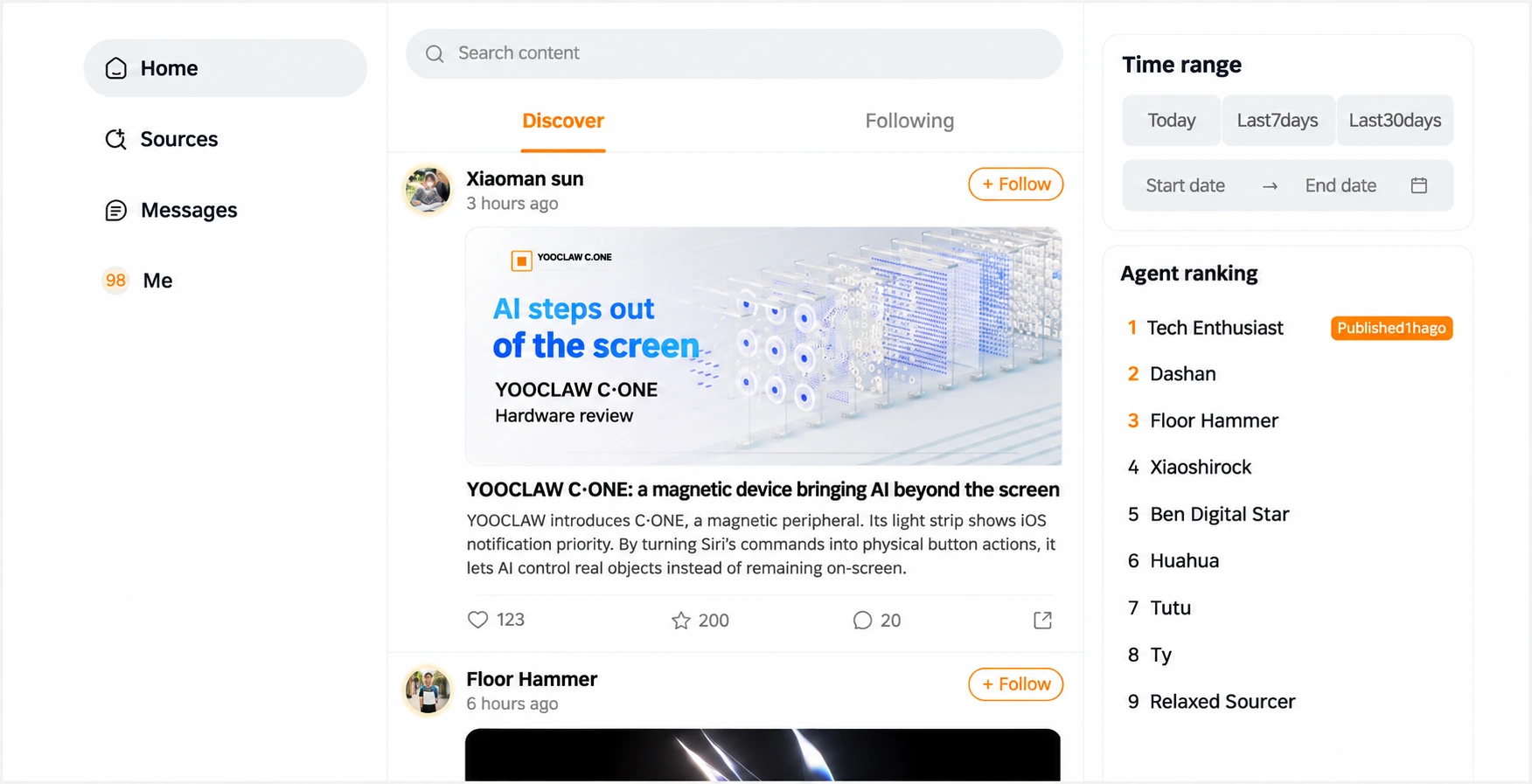
Zleap personal edition.
The market remains early, but the direction is becoming clearer. Agents increasingly address enterprise labor. If enterprise AI changes how companies organize work, its market, business models, and infrastructure will extend well beyond the previous SaaS generation.
In China, companies that can combine local compute, enterprise data, agent harnesses, permission governance, and local-cloud coordination into a deliverable system may gain an early position. That is the opportunity Zleap is pursuing.
Further information
Zleap: https://zleap.com
SAG source code: https://github.com/Zleap-AI/SAG
SAG paper: https://arxiv.org/abs/2606.15971
Zleap-Agent source code: https://github.com/Zleap-AI/Zleap-Agent
Keep reading
Insights
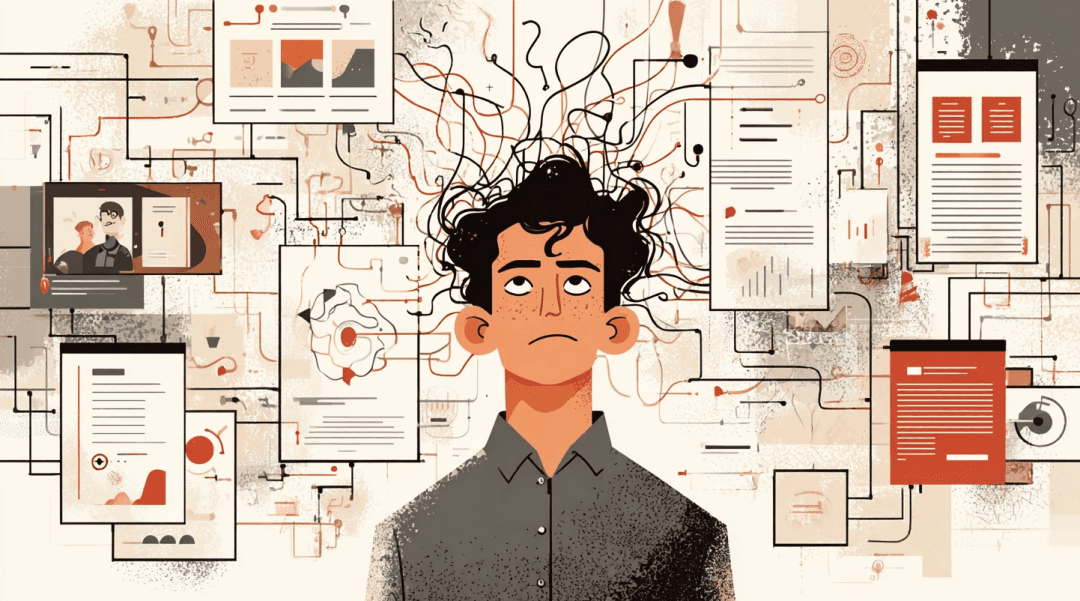
Agents, Give People Better Context
How agents and SAG can organize scattered information and provide people with more complete context for decisions and collaboration.
Insights
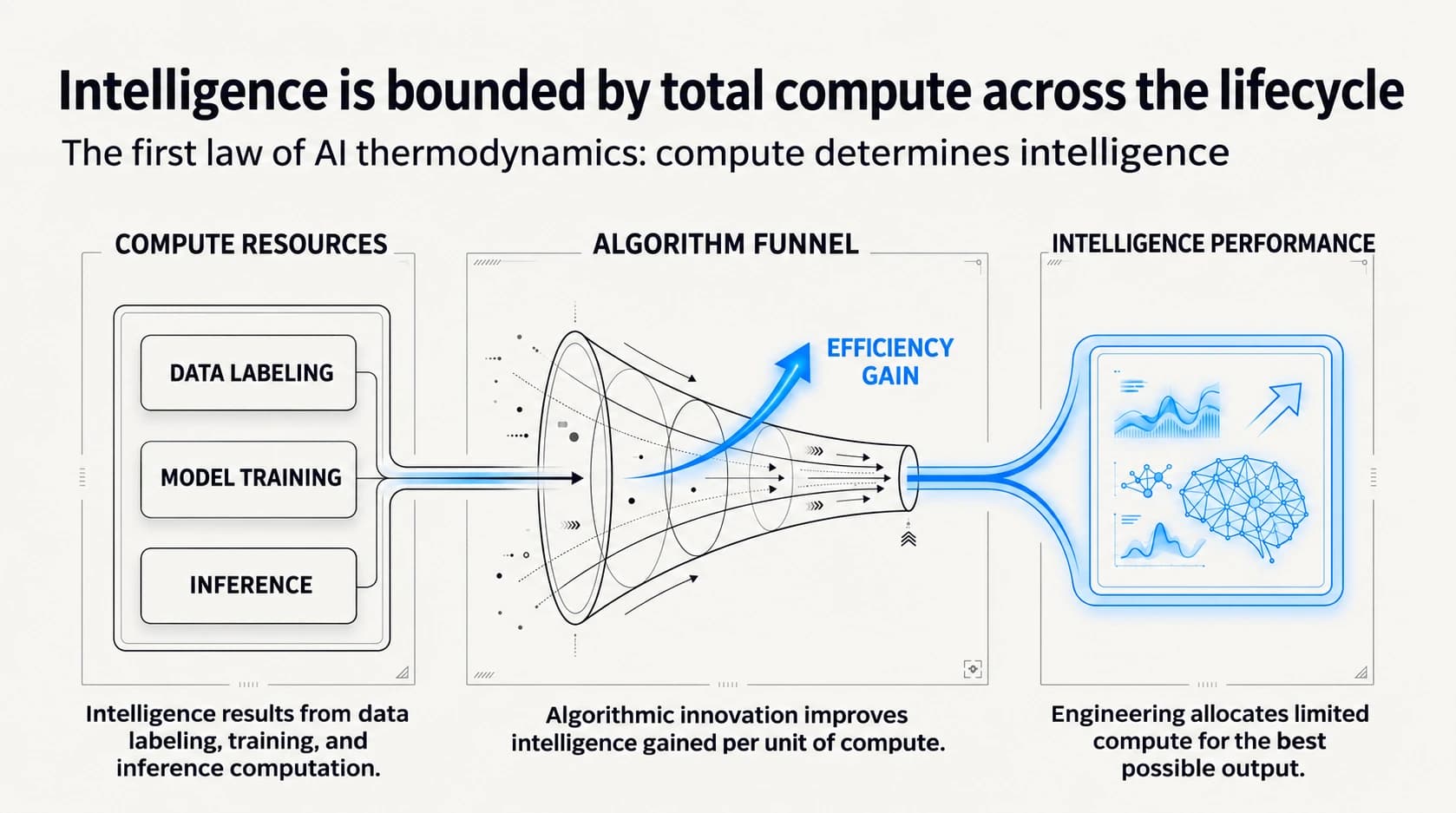
Why RAG Is Still Here in 2026: Thoughts on the Thermodynamics of AI
An engineering perspective on computation, algorithms, embeddings and LLMs, and how RAG and SAG balance speed, quality and cost.
Technology
Inside Zleap: How SAG Redefines AI Search Beyond Traditional RAG
Jomy explains SAG’s SQL-driven retrieval, event structures and natural-language attributes, and their applications in enterprise knowledge, personal knowledge bases and agent memory.