
A Second Year of Building AI for Business Leaders
Crossing revisits Jomy to discuss Zleap’s evolution from a CEO management appliance to a Token Router and Zleap OS, unified enterprise AI, and continuously running agents.
Perhaps what business leaders ultimately need is a company where much of the work happens without waiting for them to initiate it.

The word “boss” can sound slightly out of place in the AI era. But Jomy, founder of Zleap, is already in his second year of building AI for bosses.
At AI launches over the past two years, people have preferred “founder,” while employees call one another colleagues or classmates. Few products have focused on the boss.
Jomy believes enterprise AI transformation must start with leadership and proceed from the top down. Buying resources, paying for them, and changing how work happens all require decisions from the person in charge.
These customers share a few characteristics:
- They have little time, prioritize results, and move quickly once convinced.
- They rely on layers of reporting to understand their companies, yet worry that information gets filtered. They want to see a new tool work before paying for it.
Jomy's original product addressed a question central to their concerns:
What is happening across the company?
A year ago, Crossing interviewed him about a “CEO management appliance” intended to get leaders using AI first and help their companies begin transforming.
A year later, his understanding of enterprise AI transformation has changed.
Rather than dissecting product concepts, we wanted to use Zleap as a case study of what has changed in enterprise AI during that year.
This article considers three questions:
1. Why did the approach to giving leaders visibility into their companies change?
2. How can leaders manage the AI their employees use?
3. How can leaders keep AI working continuously?
Why did the approach to company visibility change?
In last year's conversation, Jomy's idea for the management appliance was simple:
Have an AI agent automatically collect internal information so the boss can open it and see what everyone is doing.
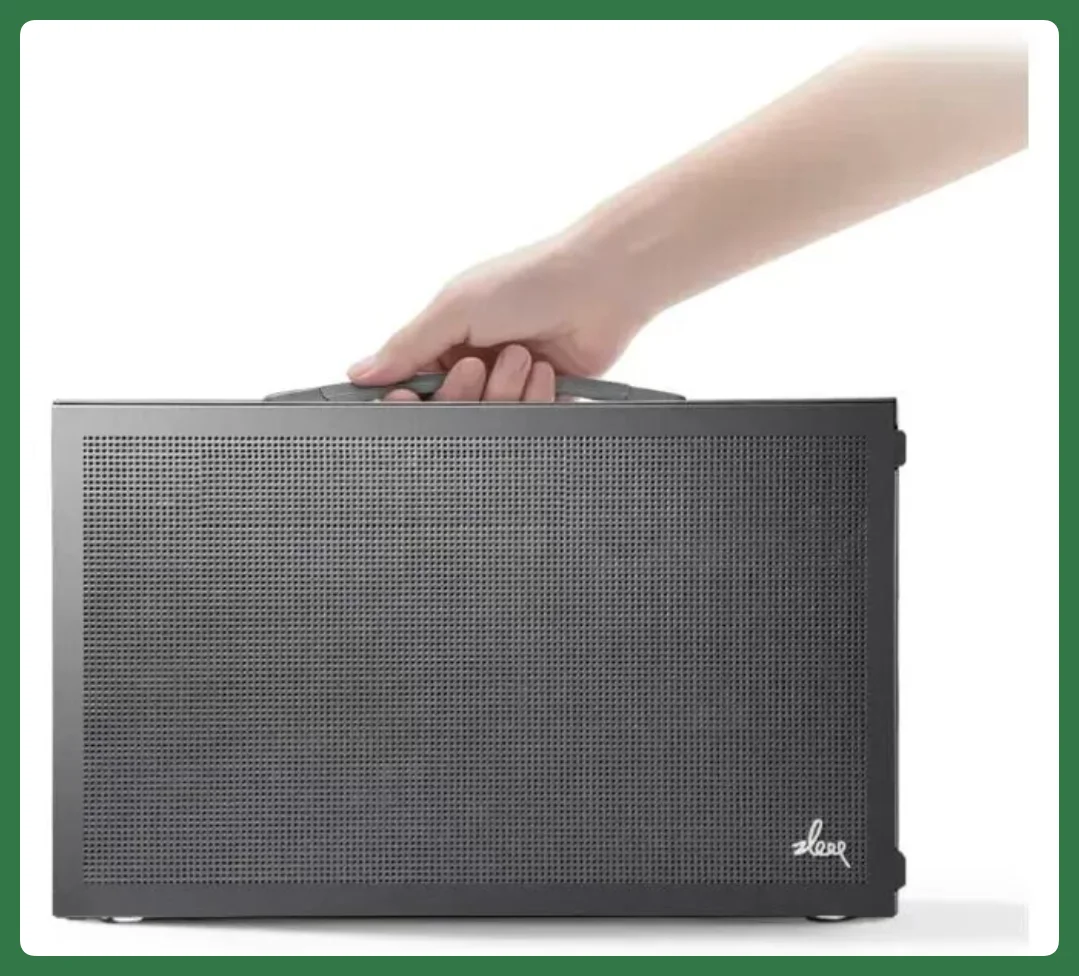
The CEO management appliance.
The agent mainly operated in group chats and internal systems, collecting and organizing work information.
Jomy later acknowledged substantial organizational resistance during deployment. Employees actively avoided it and did not want to provide work information. Information was also scattered across messaging apps, documents, email, and project tools, each requiring a separate integration.
The need remained, but collecting information proved difficult to scale.
When detailed work information is hard to gather completely, leaders often turn first to measurable indicators. In 2026, wider agent adoption created an opportunity: as more work passed through agents, token usage became another way to observe team activity.
Token usage is, after all, easy to count and compare.
Companies also began incorporating AI use into management.
In April 2025, Shopify CEO Tobi Lütke circulated an internal memo making AI use a baseline expectation and part of performance reviews.
Microsoft, Meta, and Coinbase subsequently introduced similar expectations. Coinbase CEO Brian Armstrong said on a podcast that after buying AI coding tools, he dismissed engineers who failed to use them on time and could not explain why.

A clip from Brian Armstrong's podcast interview.
Token leaderboards soon appeared.
This April, a Meta employee created a leaderboard ranking more than 85,000 employees. It was shut down two days after becoming public. An employee-built Amazon leaderboard was also discontinued after people ran pointless tasks to improve their rankings.
Deliberately consuming tokens this way became known as “tokenmaxxing.” In an October internal memo, Amazon called such metrics deeply flawed and shifted attention toward how many features actually shipped.
Usage totals alone show leaders numbers, with little indication of what work was accomplished.
Jomy saw another opportunity.
How can leaders manage employees' AI?
As employees do more work through AI, could managing that AI help leaders understand the work itself?
They need to manage the whole process:
Where models come from, how costs are settled, where data goes, and what work the calls actually accomplish.
These steps are usually spread across different platforms.
Employees may buy tools independently and send contracts or customer information to external models, leaving companies with limited visibility.
Microsoft's 2024 survey found that 78% of people using AI at work brought their own tools. IBM's 2025 report found that one in five organizations had experienced a data breach involving employees' unauthorized use of AI.
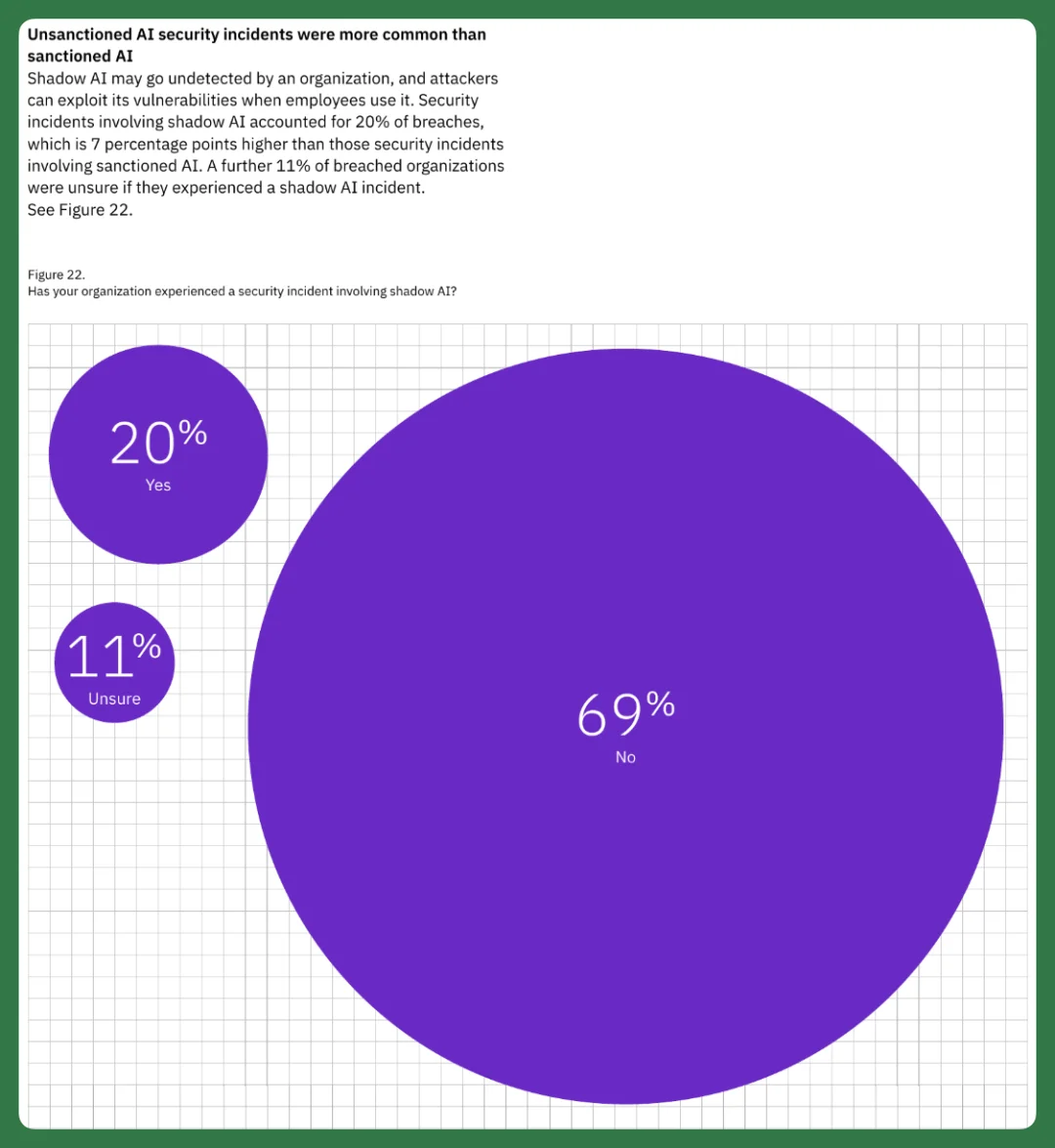
IBM's Cost of a Data Breach Report 2025.
Even centralized purchasing leaves companies with questions about costs and supplier selection.
Jomy considers OpenRouter comprehensive in model coverage but less competitive on price. The quality of other intermediary services varies, and selecting reliable suppliers requires expertise.
Connecting directly to each model provider means opening accounts, configuring keys, handling fragmented bills, and deciding how to route requests.
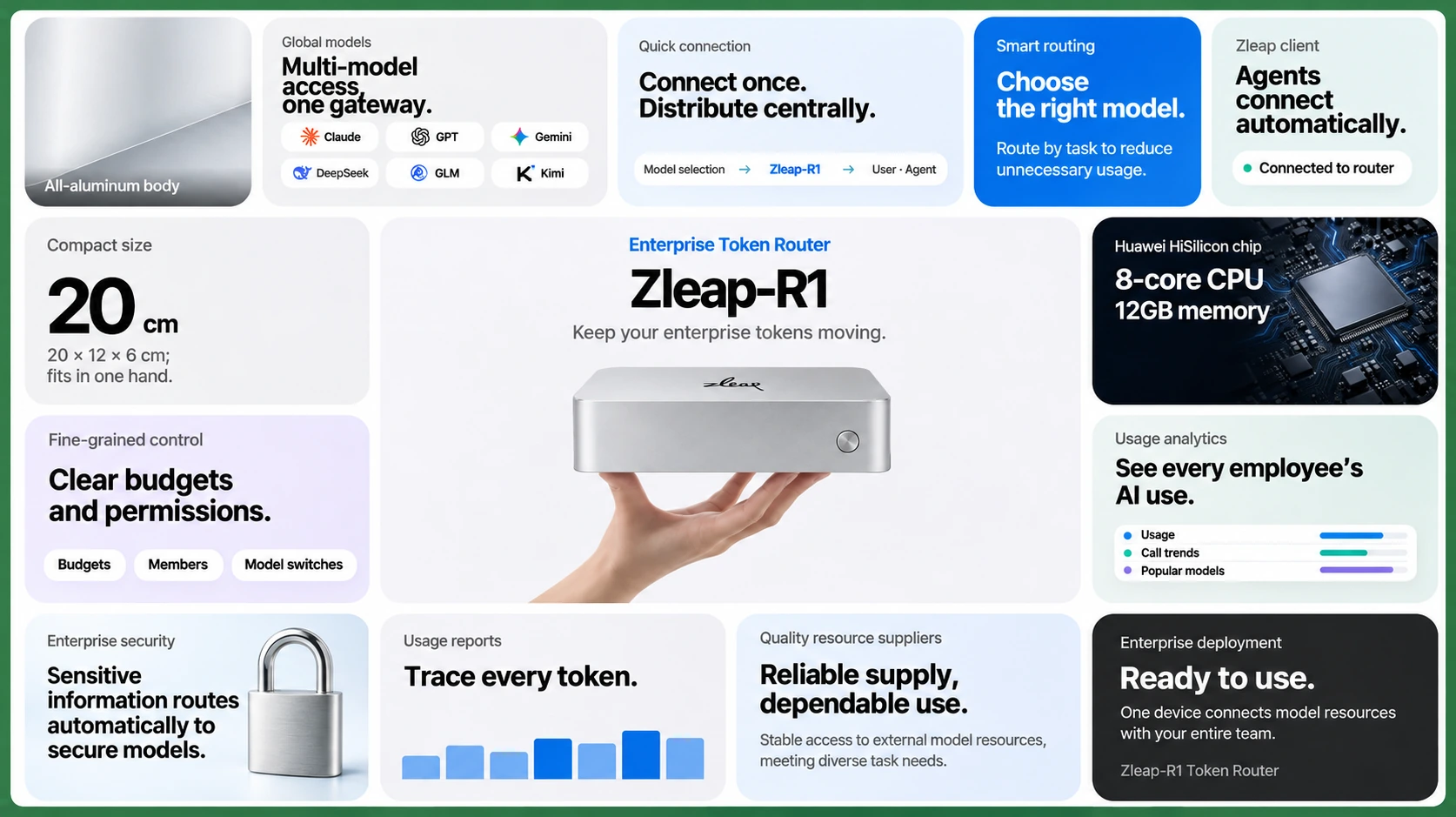
Zleap offers a unified management entry point:
The Token Router.
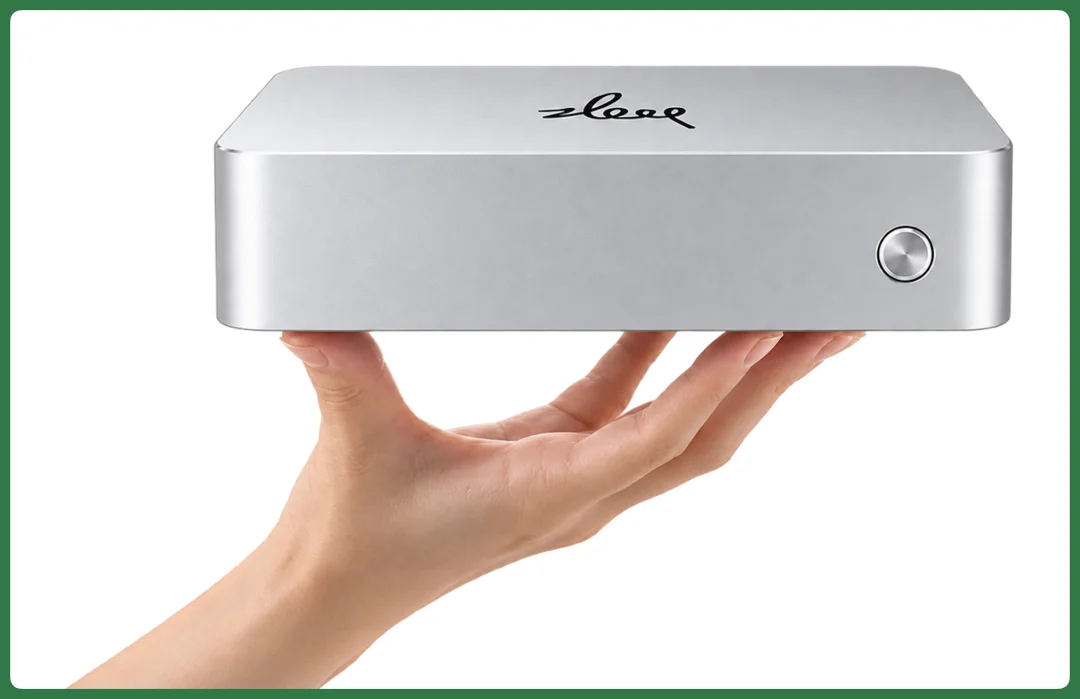
It is an integrated hardware and software product ready to use out of the box. Hardware provides a common access point on the internal network, while software distributes and manages model resources.
Automatic routing between large and small models, sensitive-information redaction, budget management, and summaries of work activity are integrated into one product.
Tokens are paid resources. Zleap selects and recommends model resource providers, then connects and supplies them through the router, reducing the work of evaluating and integrating suppliers individually.
Employees can install the client themselves. It automatically discovers and connects to the router on the internal network, removing individual configuration and personal payment.
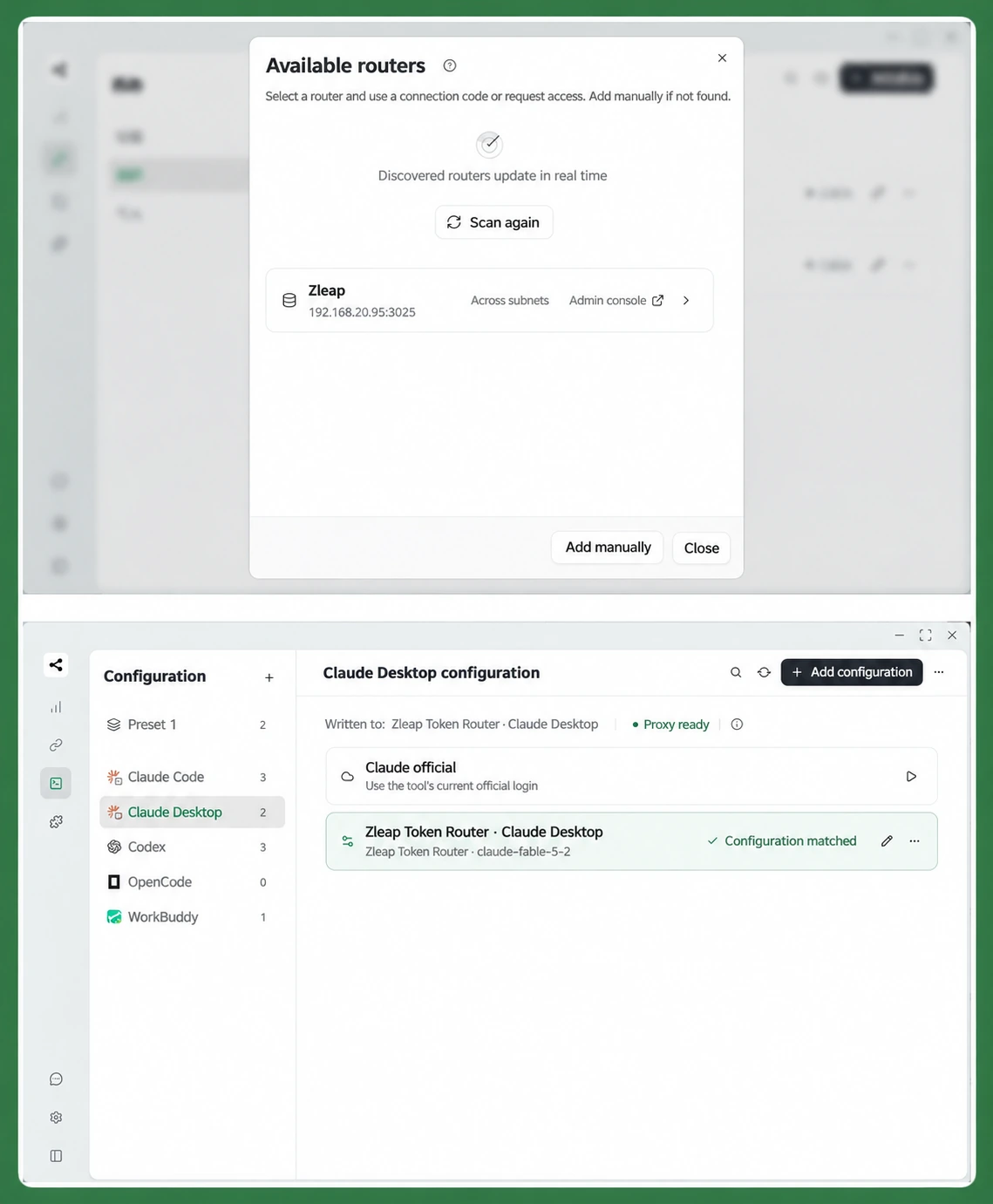
Simplifying access makes top-down adoption easier. As employees use these tokens, calls pass through the company gateway.
An essential prerequisite is that employees know what is happening and are willing to share context with the company's AI.
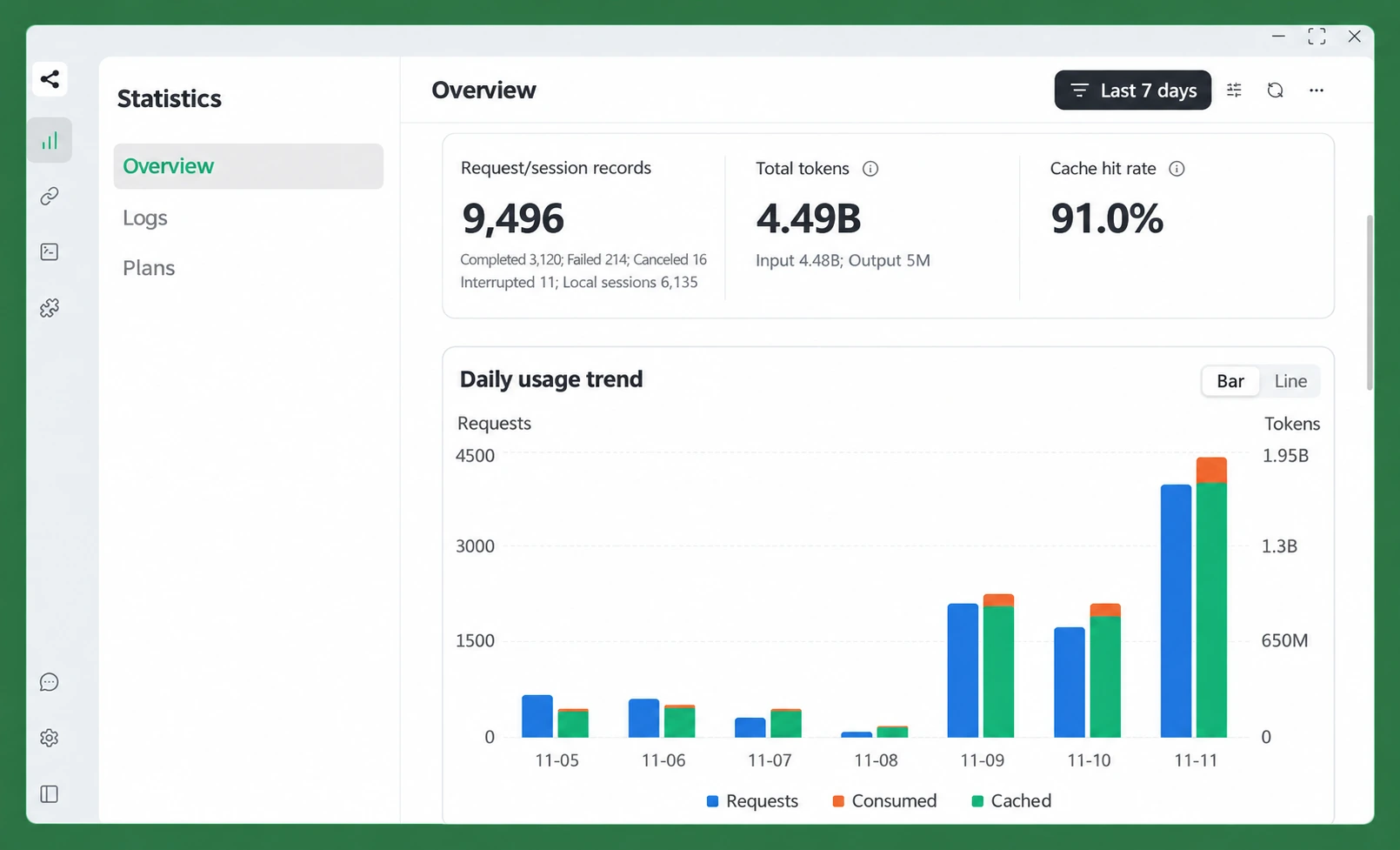
Client usage on the website.
According to Jomy, these capabilities draw on three years of experience operating the 302.AI model gateway platform.
He has combined resource supply and call management capabilities developed in that service into a ready-to-use enterprise hardware and software product.
Similar “AI gateways” are developing overseas. They sit between companies and models, allocating models, recording usage, controlling budgets, and filtering sensitive information.
Gartner published a dedicated market guide for this category last October.
This May, Palo Alto Networks acquired AI gateway company Portkey. AI usage management is becoming part of enterprise security purchasing.
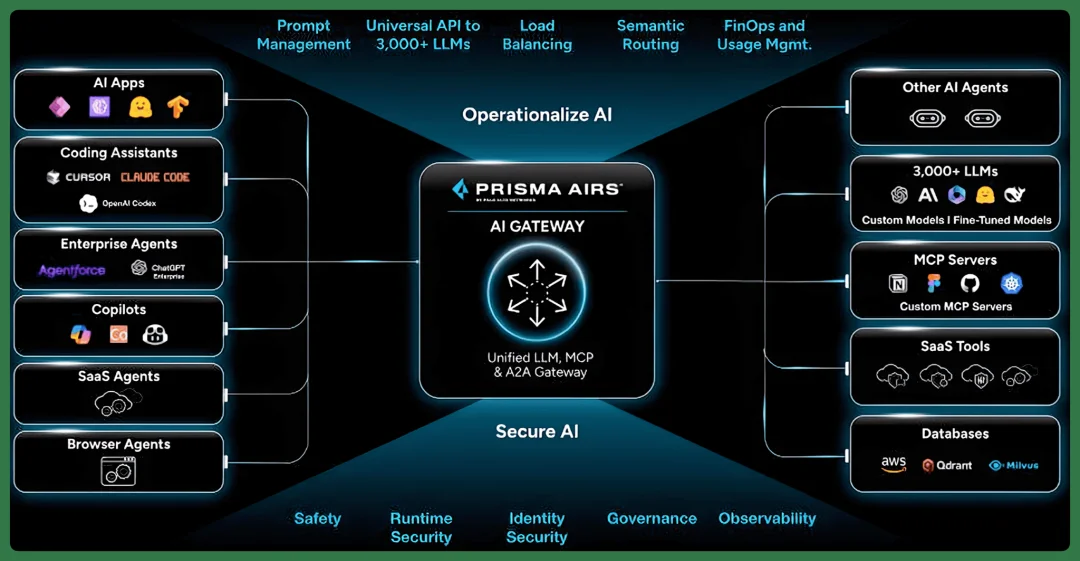
The post-acquisition Prisma AIRS AI Gateway architecture connects applications and agents on one side with more than 3,000 models on the other.
Overseas gateways are mostly software products whose deployment and configuration depend on enterprise technical teams. Zleap combines hardware and software for companies without dedicated teams, making the product easier to use immediately.
Zleap says the router went on sale and began shipping to customers this November, with positive market feedback.
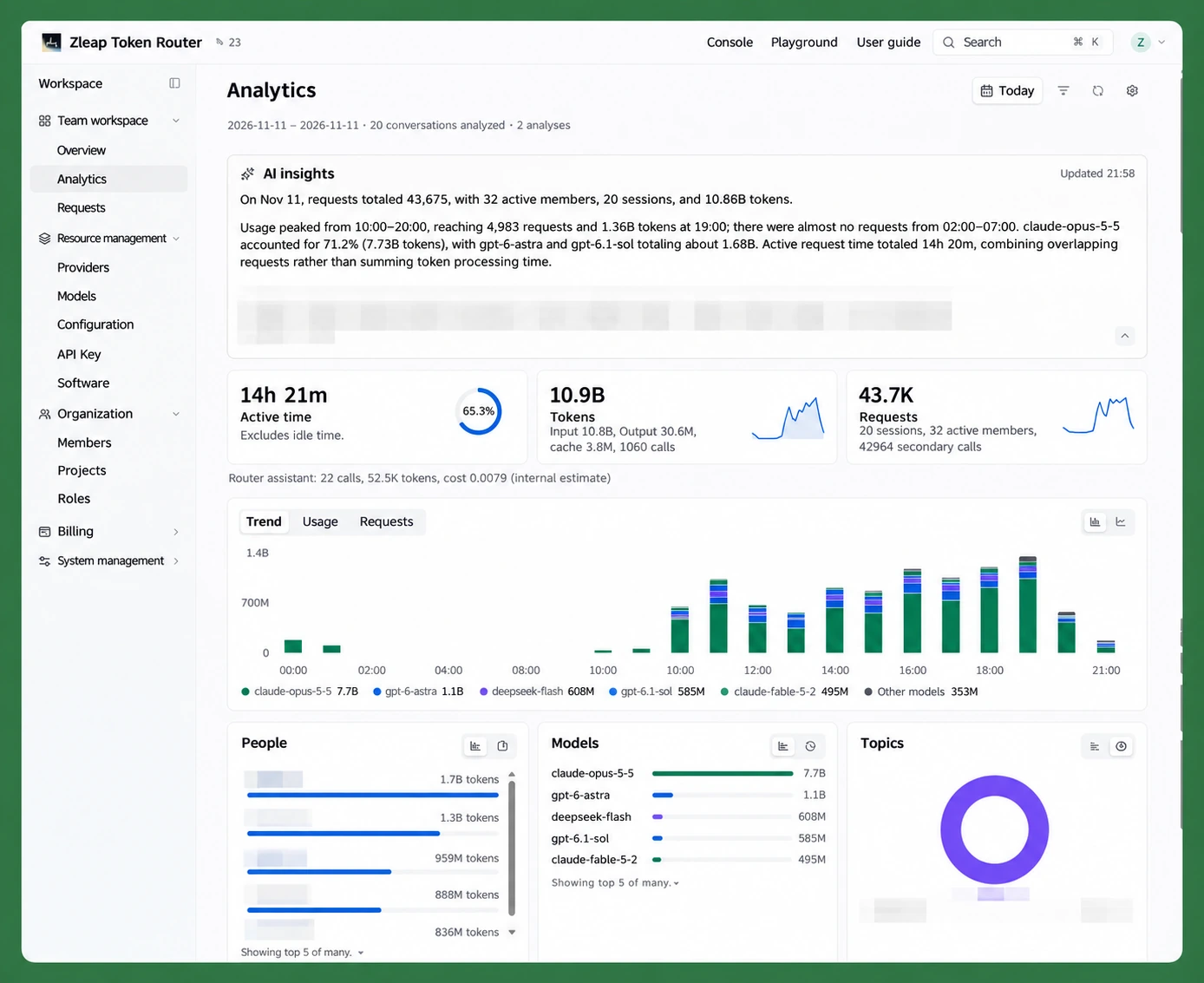
By managing AI use through a unified entry point, the Token Router achieves the original management appliance's goal: helping leaders see what employees are working on.
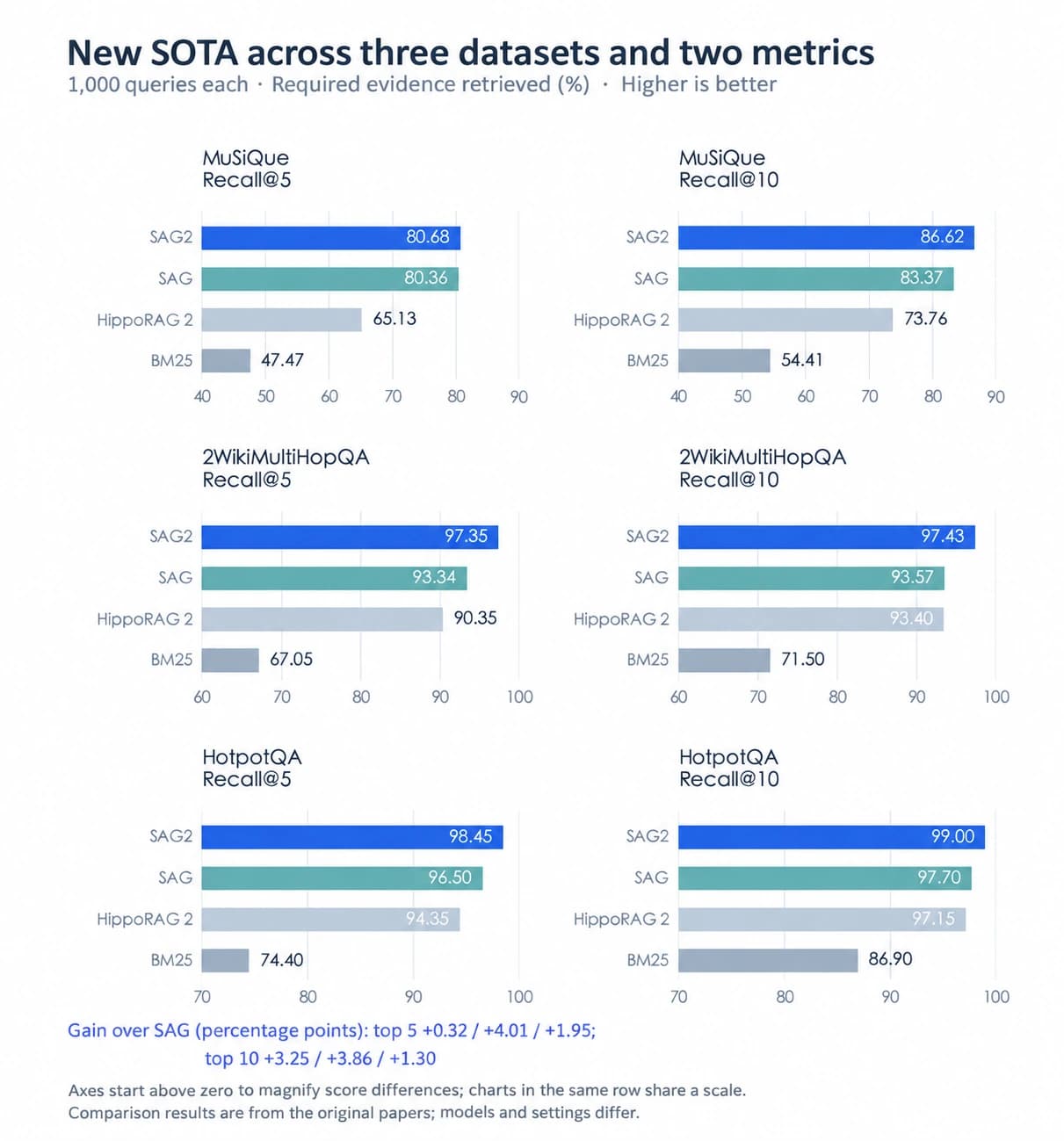
Employees call models through one entry point, concentrating their work records. Zleap then uses its own SAG2 information-processing technology to extract important information and summarize progress from those records.
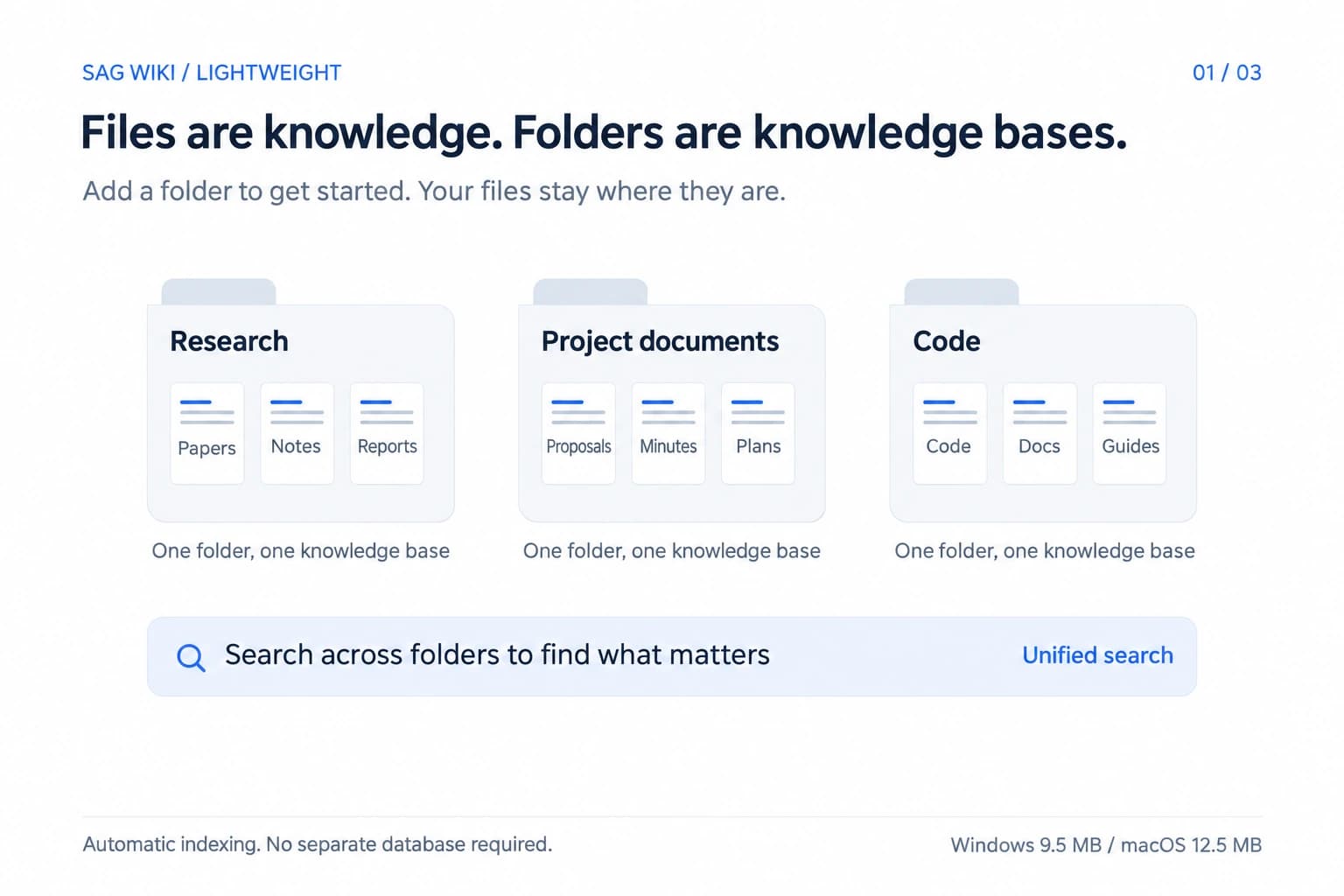
SAG-Wiki, an open-source project built on SAG2, also gained more than 1,000 GitHub stars in a single day.
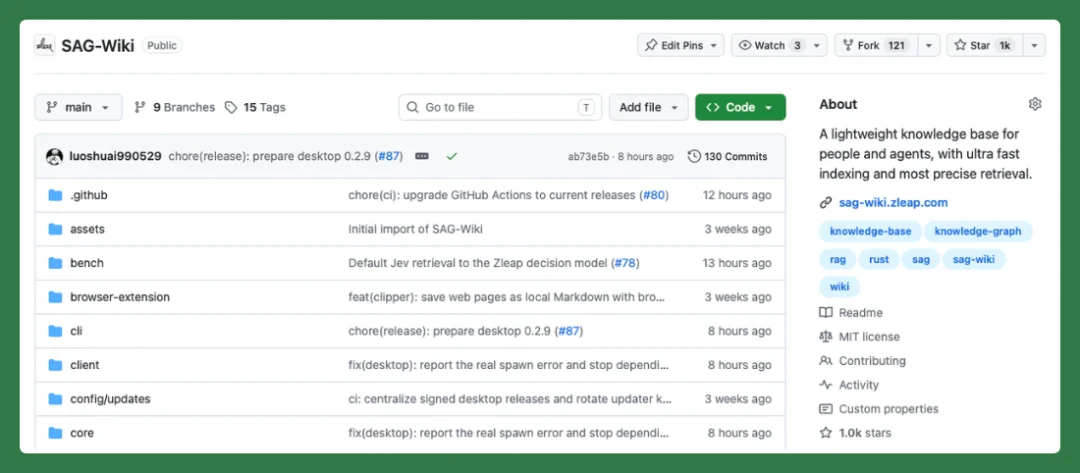
The records contain task requirements as well as model-generated material, helping leaders understand actual progress.
Others overseas are also discussing how work records can make companies more understandable.
This March, Block founder Jack Dorsey and Sequoia partner Roelof Botha argued that organizational hierarchies primarily transmit information.
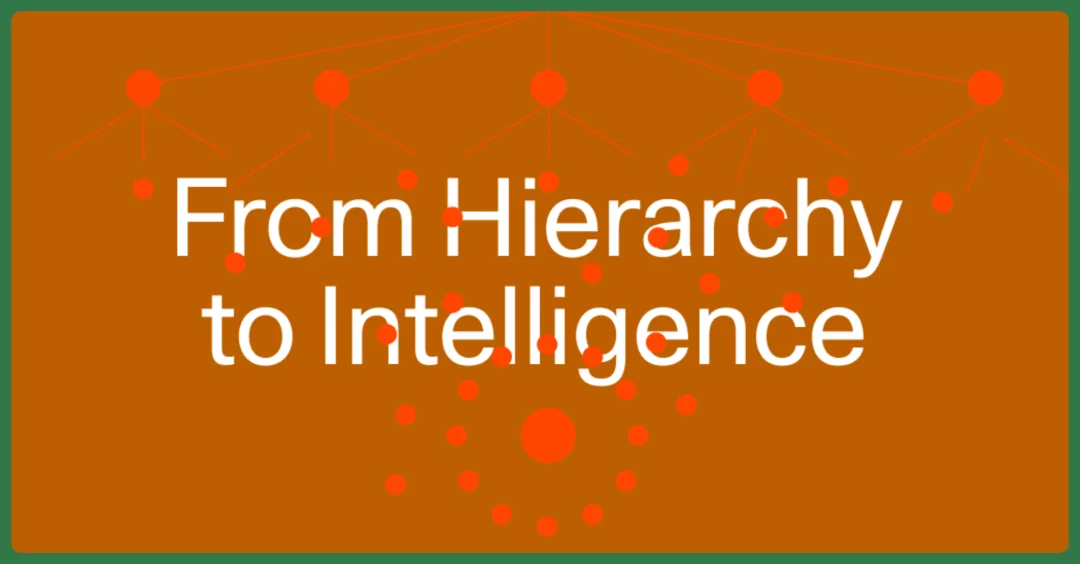
Sequoia's From Hierarchy to Intelligence: a hierarchy evolves into a circular network.
If decisions, discussions, code, and progress are recorded, AI can maintain a “company world model,” reducing much middle-management work.
Jomy uses the Token Router himself to quickly understand progress across departments.
In his words:
It gives you context for the whole company.
How can leaders keep AI working continuously?
Unified supply and access enable employees to actually use AI—the first step in enterprise AI transformation.
An employee makes a request, an agent delivers code, a document, or a proposal, and the task ends. Jomy calls this build-time work.
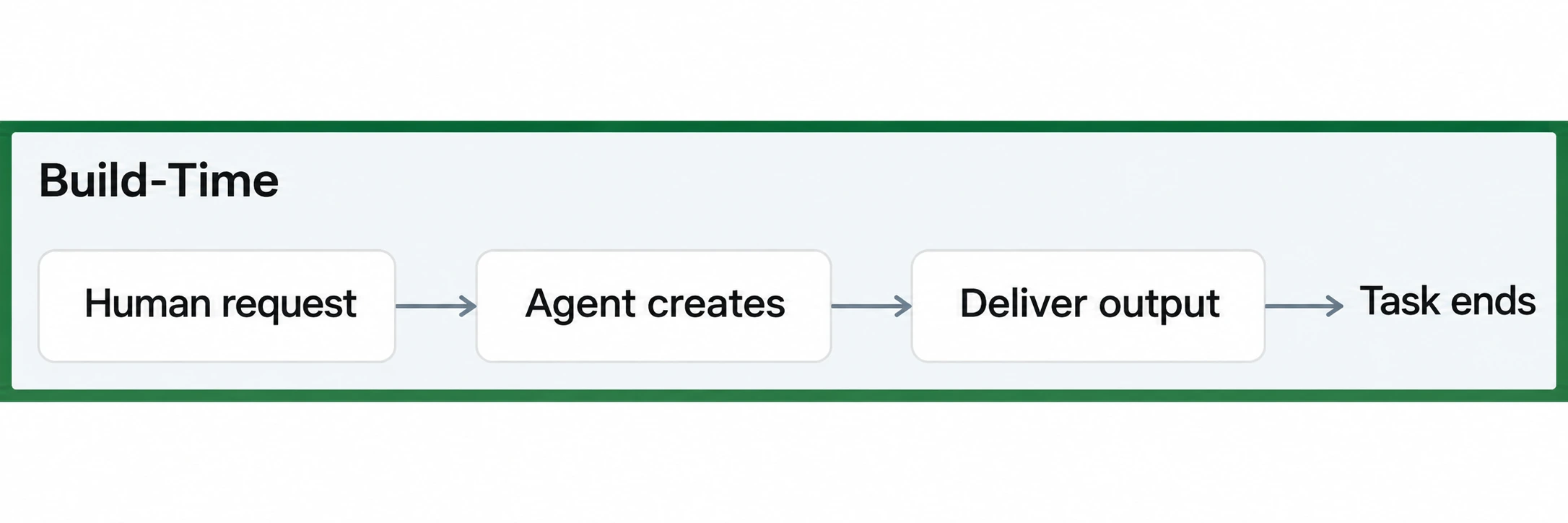
In his view, most existing AI tools serve this stage, where people drive the work cycle. Most Chinese companies are only beginning to enter it.
What comes next?
Jomy sees the second step as gradually removing the need for people to repeatedly initiate tasks.
He calls this run-time:
An agent works continuously toward business goals, learns from feedback, adjusts its actions, and improves outcomes. People set goals and intervene when necessary.
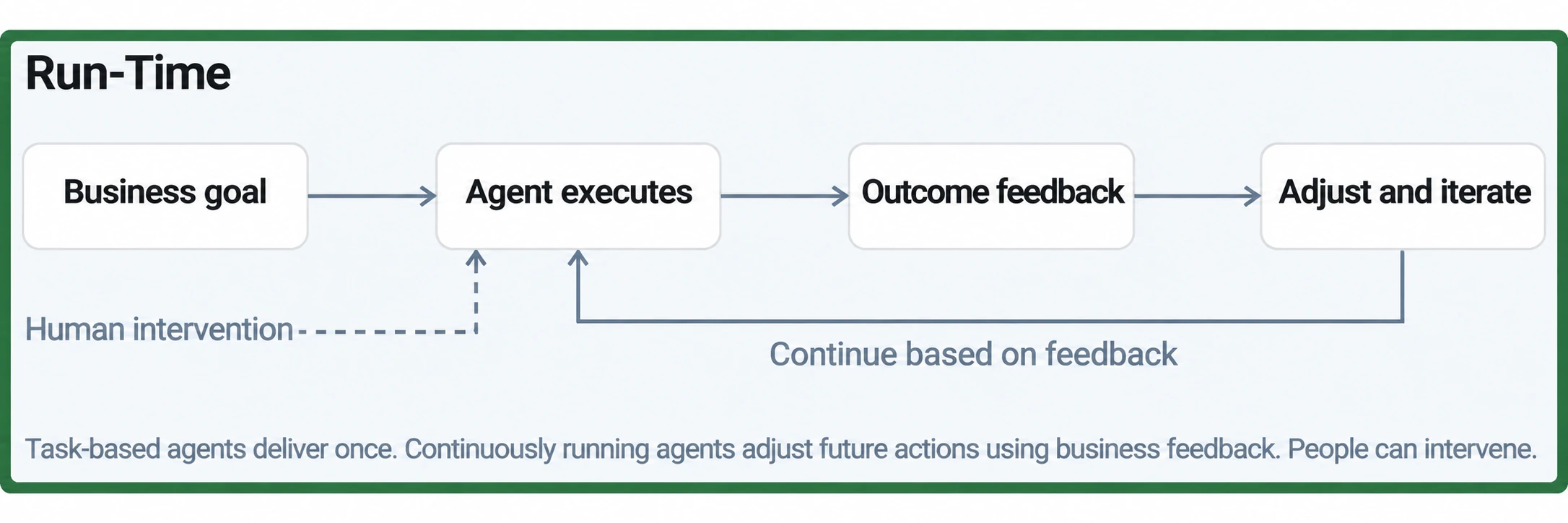
The overseas AI community has discussed this direction for nearly two years.
In early 2025, LangChain CEO Harrison Chase introduced “ambient agents” that listen for business events and act automatically. An a16z article this October described a new generation of agents that wake on events or deadlines and continually learn through work.
At this August's earnings call, Jensen Huang said future agents would run continuously and collaborate with other continuously running agents.
Products are visibly moving in this direction. Claude Code, Codex, and Cursor have all brought coding agents to the cloud, allowing agents to keep working on servers after users close their computers.
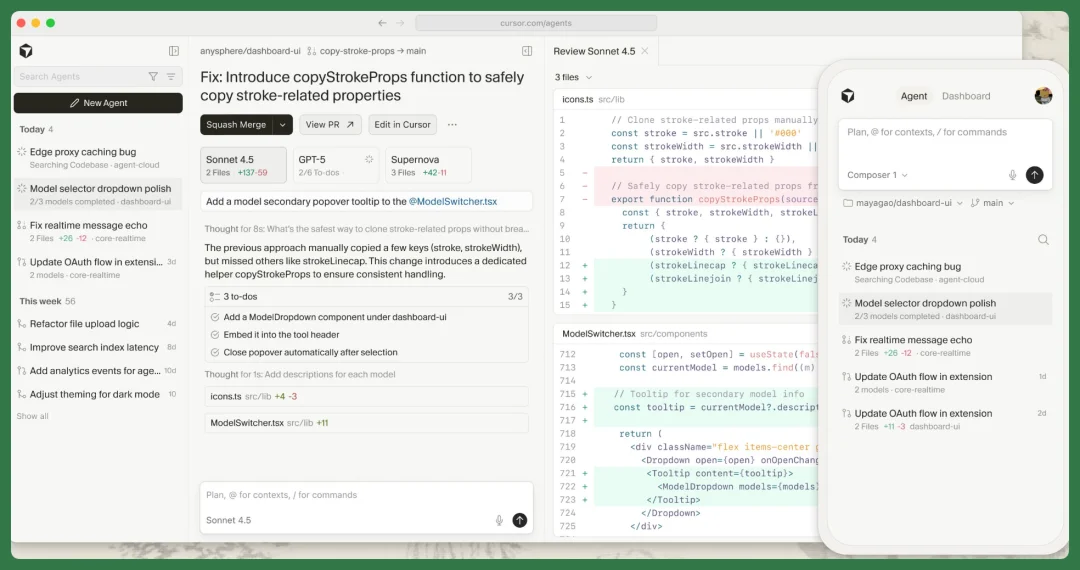
Cursor Cloud Agents running in the cloud.
From another perspective, many of these products remain intermediate forms. Schedules or events trigger them automatically, but each run still completes and delivers a single task.
Long-term operation toward a goal with continuous improvement through feedback is mostly still in preview. Former OpenAI founding member Andrej Karpathy is more cautious, describing a “decade of agents.”
Jomy's theory is that a company today resembles a harness where people and agents coexist.
In agent development, a harness is the operating environment outside the model: tools, data, permissions, and feedback mechanisms. Many strong implementations already exist.
Seeing a company as a larger harness suggests borrowing those designs to connect enterprise goals, data, execution environments, and feedback so people and agents work within the same system.
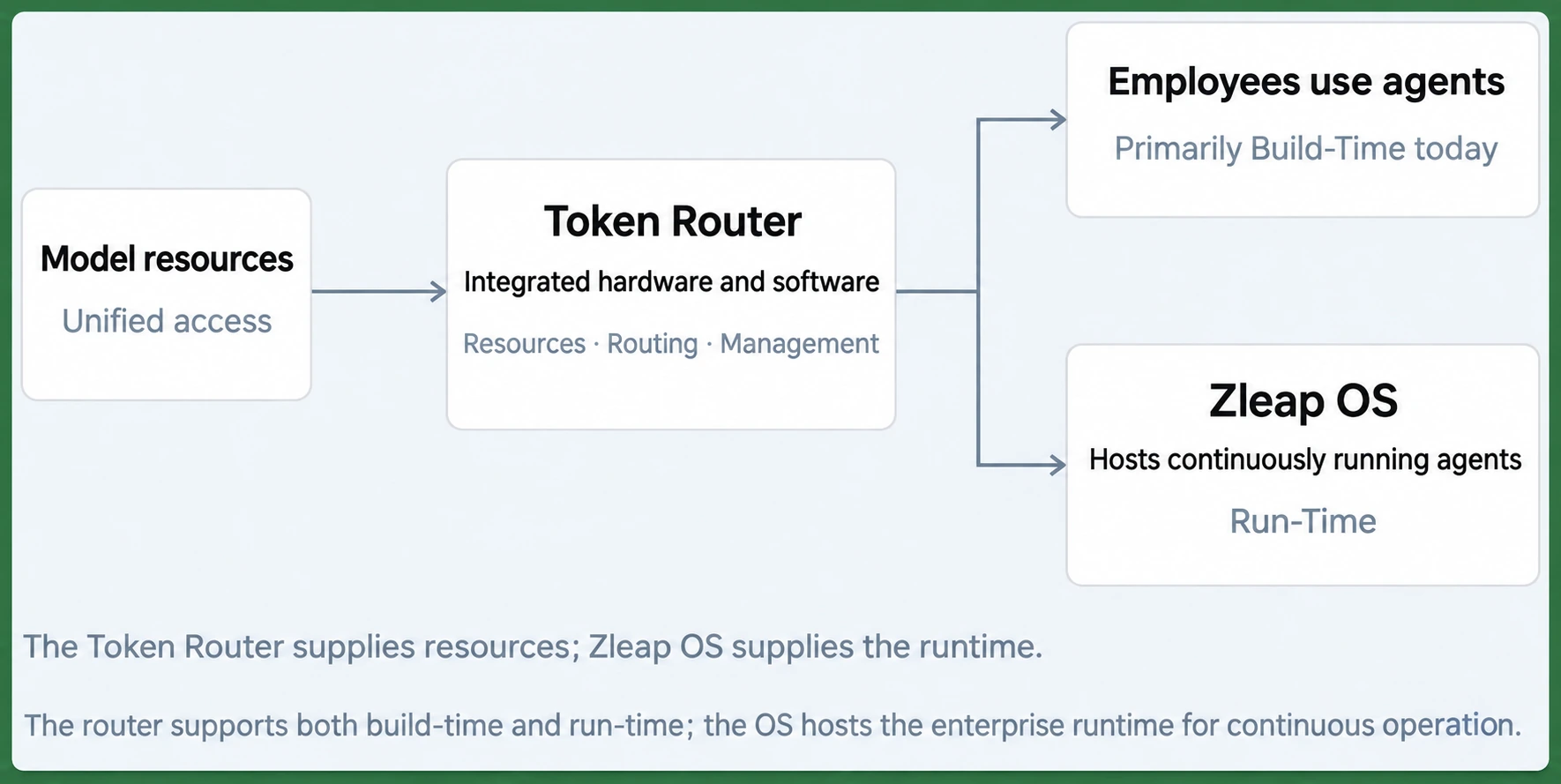
Based on this theory, Zleap is developing a second product: Zleap OS, a server operating system for continuously running enterprise agents.
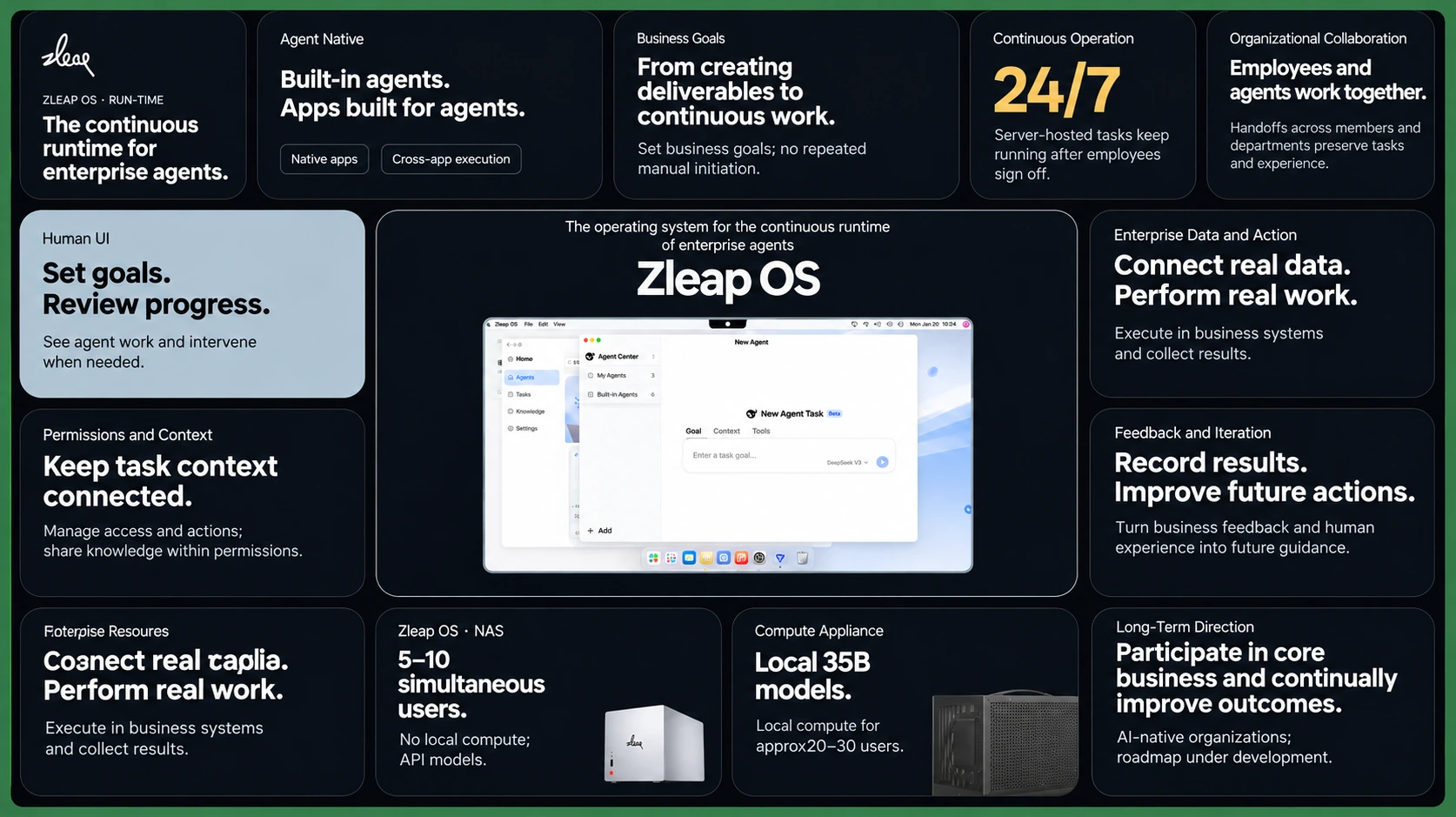
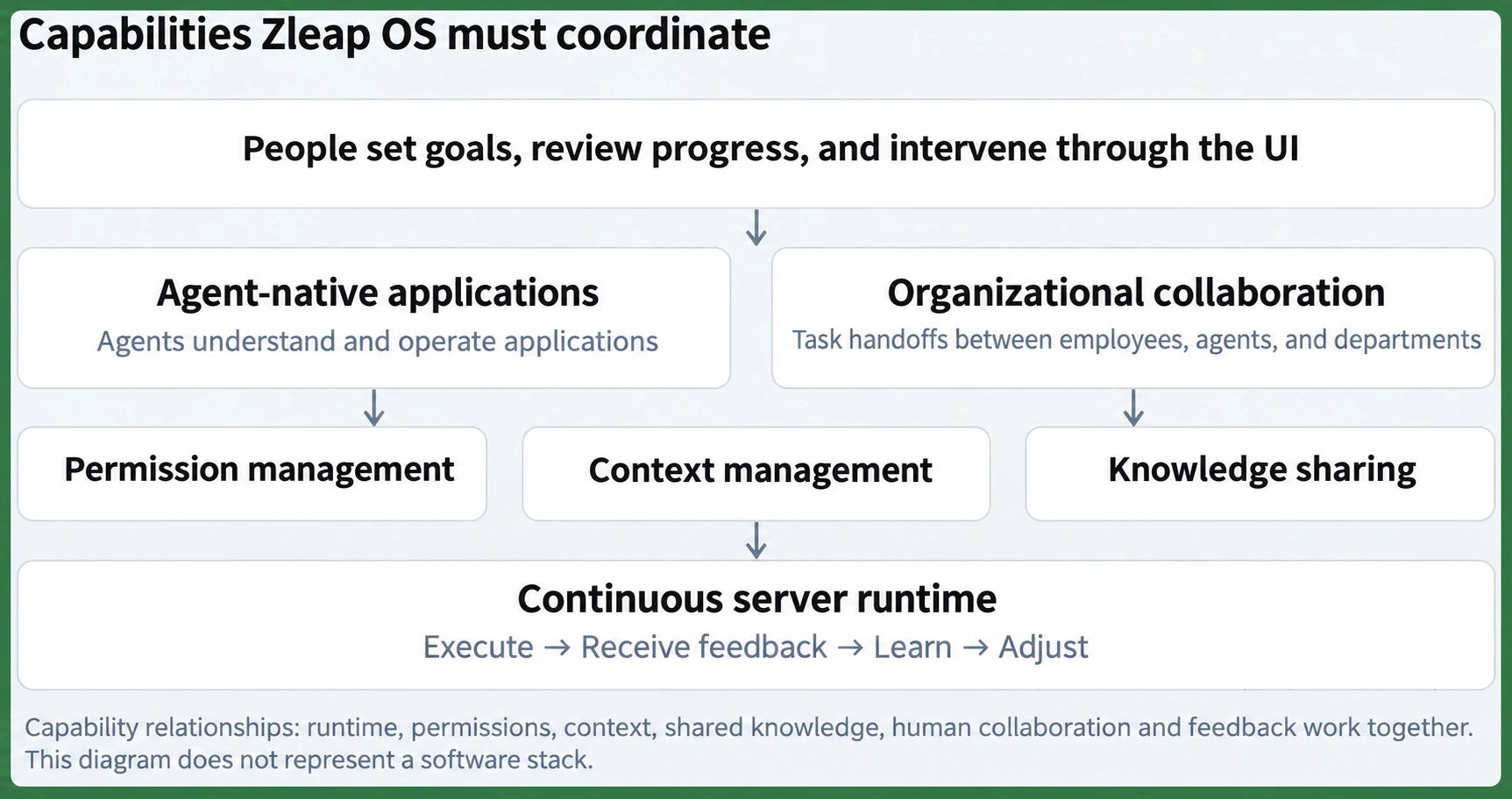
Jomy's requirements fall into three groups:
1. Agents can work continuously across applications
Every application is designed for agents. Agents run on servers and keep working after employees leave and shut down their computers.
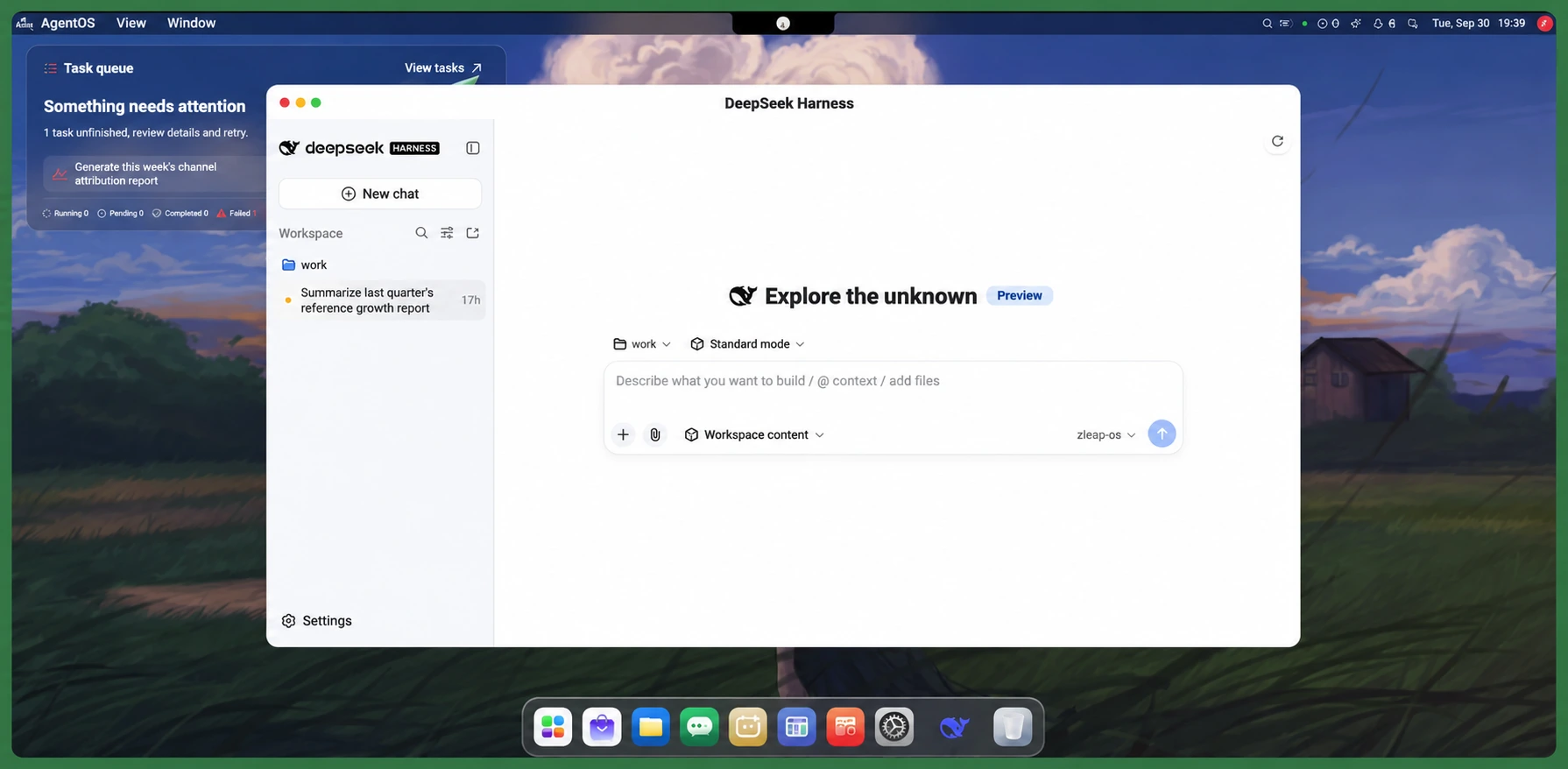
Agent work interface.
2. Organizational collaboration has boundaries
Employees, agents, and departments can collaborate and hand over tasks. Permissions determine who can read information and act; context and knowledge are shared within authorized boundaries.
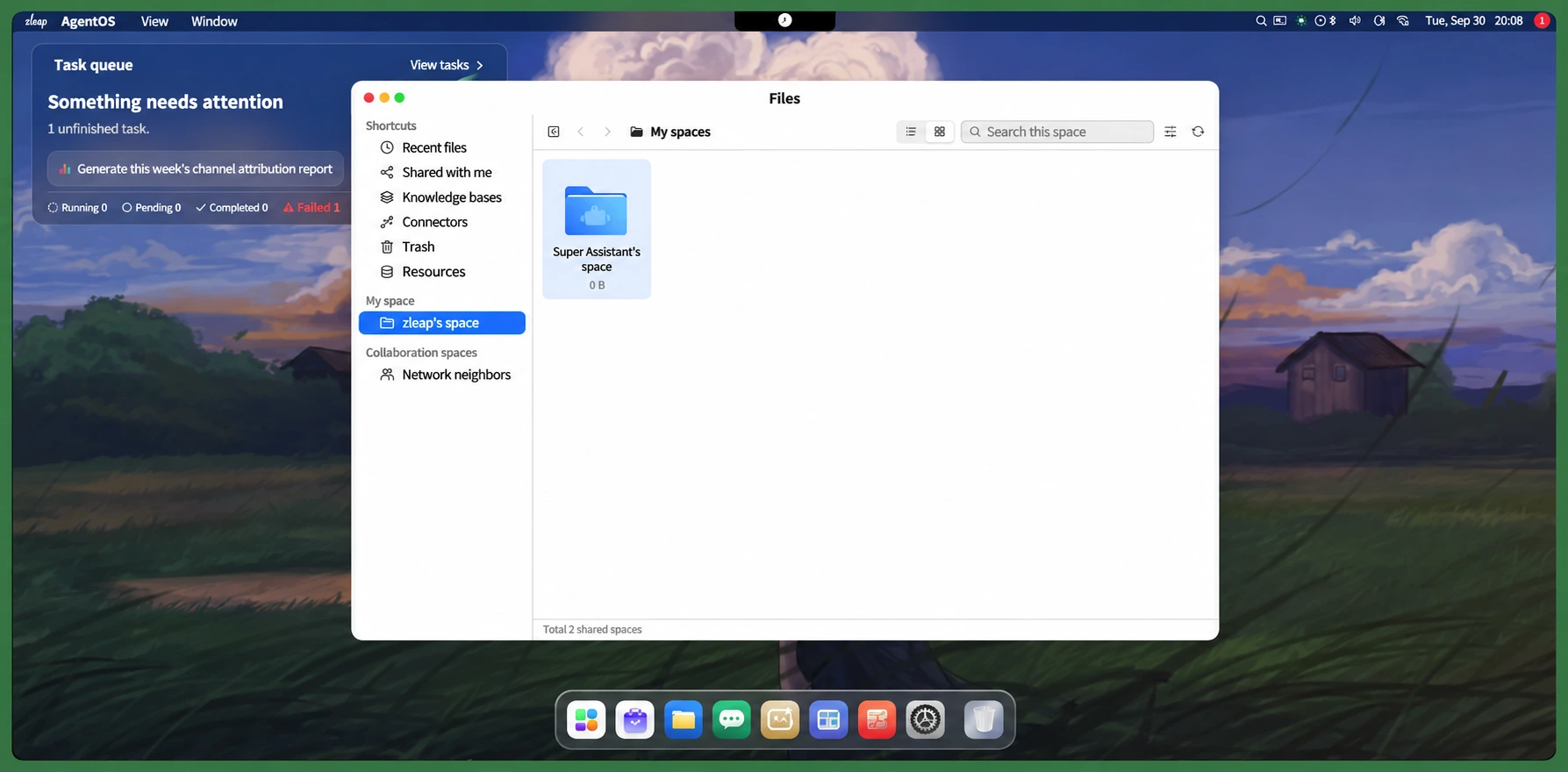
Team file storage.
3. People and agents can both use it, and it can improve through iteration
People use the interface to set goals, review progress, and intervene. Agents continuously execute, receive feedback, and assess whether adjustments improve business outcomes.
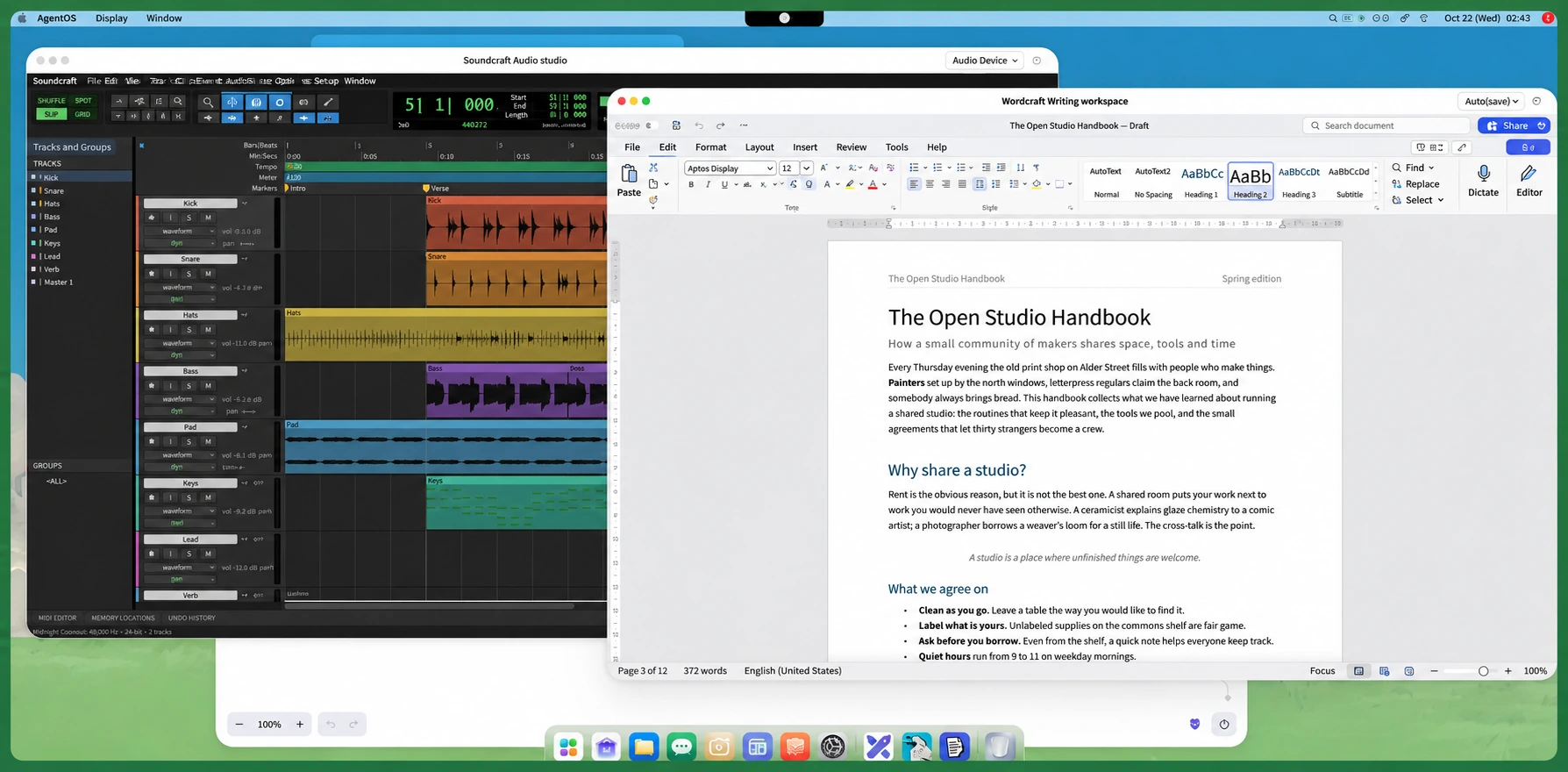
Desktop workspace.
Several companies are already participating in this direction. Anthropic, OpenAI, Microsoft, and Kimi all launched enterprise agent hosting services this year.
Earlier responses to these services were muted. Four common explanations are unreliable agents, difficult enterprise data integration, unresolved permissions and governance, and unpredictable costs.
Zleap OS's requirements broadly address those issues. The real challenge is combining the capabilities into a ready-to-use enterprise product.
The Zleap OS core framework is complete and undergoing internal testing and refinement for vertical industries. The planned official release is at the end of December this year.
The Token Router supplies model resources, routing, and management. Zleap OS provides the complete system for continuously running agents.
Jomy also expects token demand to grow substantially as agents begin operating continuously and autonomously.
OpenRouter data shows that this August, agents consumed roughly five times as many tokens as human users. Goldman Sachs forecasts 24-fold growth in token consumption from 2026 to 2030.
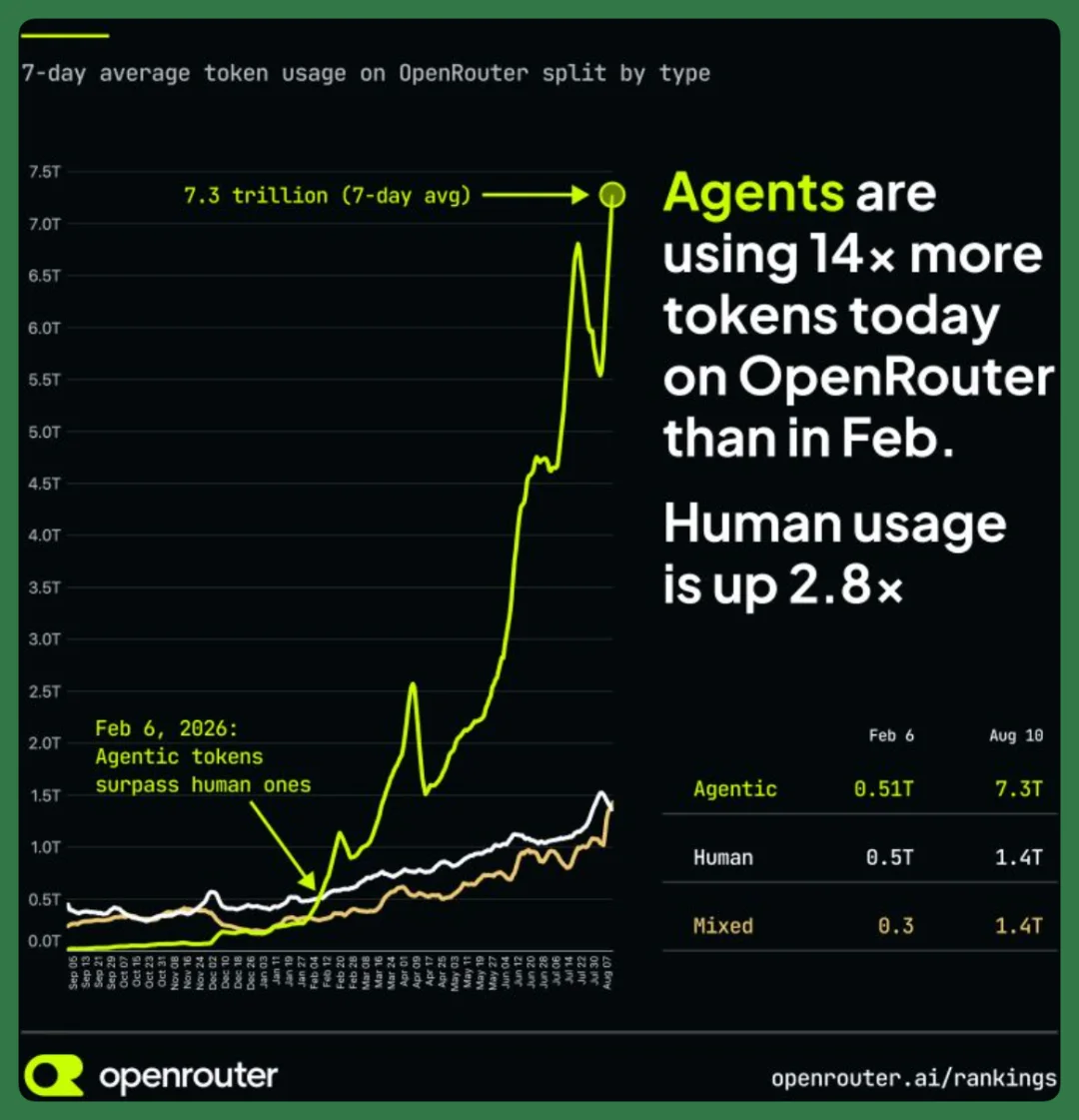
These figures do not distinguish build-time and run-time consumption.
Jomy estimates the current ratio at approximately 100:1, with development accounting for most usage. He expects run-time usage eventually to reach ten times build-time usage. Holding build-time constant, that would imply long-term growth potential on the order of 1,000 times for run-time tokens.
As he puts it:
Agents are much easier to scale than people.
Helping enterprises become AI-native organizations has always been Zleap's vision.
It began with CEOs' management needs, now extends to employees' daily work, and aims eventually to change how entire organizations operate.
Jomy believes a company becomes truly AI-native when it has its own AI runtime continuously performing core business work.
Behind that ambitious vision, we can also see a smaller personal wish:
Perhaps what business leaders ultimately need is a company where much of the work happens without waiting for them to initiate it.

Keep reading
Product
SAG Wiki: A Lightweight, Low-Cost, Precise Local Knowledge Base
Introducing SAG Wiki, the open-source knowledge base powered by SAG2, with folder-based organization, fast indexing and retrieval, and desktop and CLI access for people and agents.
Technology
Introducing SAG2: A New State of the Art, 7,000× Faster Indexing, No Vectors, Just Files
SAG2 combines keyword indexing with dynamic multi-hop retrieval. Explore indexing performance, public benchmarks, SAG Wiki and applications in agent memory.
Insights
From Tools to Employees: Trends, Principles, and Boundaries of AI Automation
Examining AI automation through capability, economics, and society, and defining authority, accountability, and collaboration between people and agents.