
Introducing the Zleap-D1 Agent Appliance for AI-Driven Management
A locally deployed agent appliance for CEOs and managers, with enterprise information collection, automated reporting, and traceable insights.
Product name:
Zleap-D1 Agent Appliance
Overview
1. Positioning
Zleap-D1 is the world's first agent appliance designed specifically for CEOs and managers.
Its privately deployed agent system automatically collects and analyzes information across the company—from Feishu, DingTalk, code repositories, email, and other sources—to help executives address management and decision-making challenges.
2. Three core strengths
- Direct access to unfiltered information: Connect internal systems such as Feishu and DingTalk. Agents analyze large volumes of frontline information and periodically generate reports free from filtering by management layers, helping CEOs hear what is actually happening.
- Visibility into development: Automatically monitor code commits and task status, visualizing real project progress and making technical management more transparent.
- Conversations become assets: Turn group chats, meeting notes, and other information into a structured knowledge base that can be searched and queried, transforming scattered information into corporate assets.
3. Intended users
- CEOs, founders, and senior managers who want better decisions and greater management efficiency.
- VC and PE investors and industry analysts following enterprise services and AI.
- Experienced practitioners interested in agents, model optimization, and RAG.
- Medium and large enterprises, government bodies, and financial institutions with strict data security requirements seeking lower-cost access to AI.
Product details
1. Why CEOs? An important area underserved by AI
Most AI tools target operational employees, helping them write code or create content. Products built specifically for CEOs have been largely absent. Being a CEO is itself a profession, centered on decision-making and management, with many unresolved difficulties. We chose this audience for three reasons.
Deep, unmet needs. CEOs face distorted information when frontline feedback arrives late or not at all; opaque management when development progress is unclear and projects slip; and fragmented knowledge when undocumented information makes cross-team collaboration difficult. These require a dedicated, private, efficient solution. We are creating a new category to address those needs directly.
The greatest impact on decisions. Improving one employee's productivity saves that person's time. Improving a CEO's effectiveness can improve the company's decisions and strategic pace, multiplying the benefit. Helping managers is a direct way to help the business.
Fewer barriers to adoption from the top. CEOs who use AI extensively themselves better understand and support its adoption across their companies. Their example can accelerate the company's AI transformation.
2. Three management problems and our solutions
“I cannot hear what is really happening.” Teams may emphasize good news and soften bad news. Hundreds or thousands of frontline messages from support, sales, and marketing become a condensed report, leaving leaders behind the actual situation.
Our solution connects information sources, aggregates and analyzes them in real time, and periodically produces comprehensive reports.
“I cannot see actual progress.” Technical work can be opaque. Asking too often strains relationships; asking too little leaves managers uncertain. Delays become routine.
Our solution automatically analyzes commits and task status to show development progress in real time.
“I cannot find the information.” Important decisions are buried in thousands of chat messages and cannot be found when needed, reducing collaboration efficiency.
Our solution automatically organizes chats and meeting notes into a structured knowledge base available for questions on demand.
Zleap is therefore an agent product designed to address management and decision-making difficulties for CEOs and leadership teams.
3. What is an agent appliance?
We combine more than hardware and software. An agent appliance differs substantially from a conventional AI appliance.
- Conventional AI appliances primarily supply compute and models. Companies must assemble expensive AI teams to build applications, creating cost, time, and implementation risks.
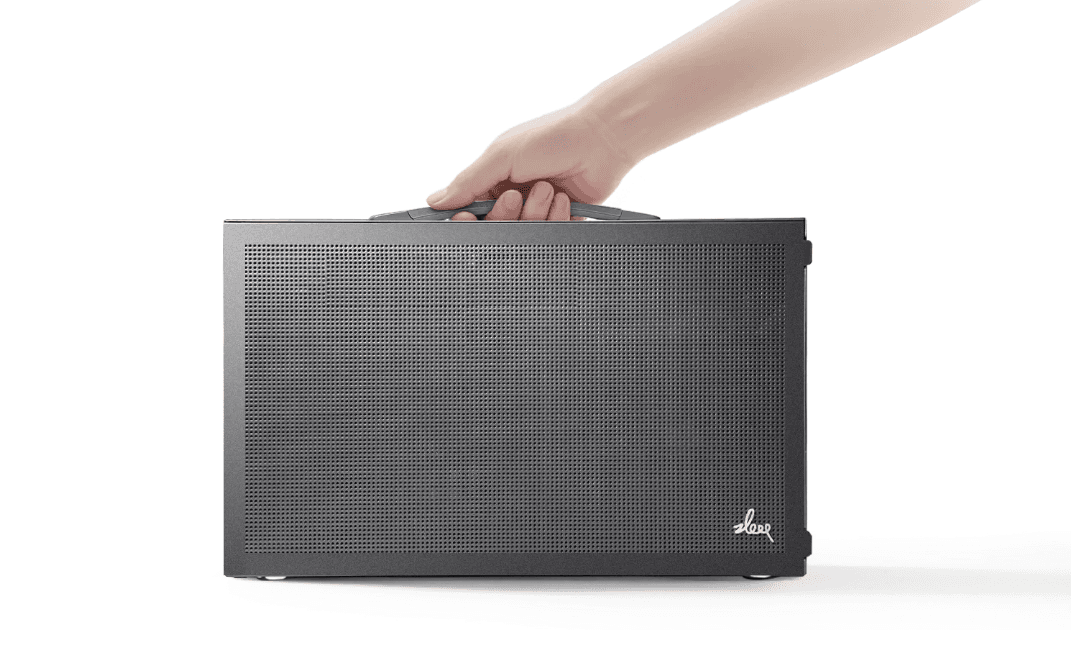
- The Zleap agent appliance is an integrated, ready-to-use solution. It combines a compact 12-liter chassis, an in-house operating system and app, local GPUs, in-house agents such as the Enterprise Report Agent and Deep Mining Agent, and privacy through private deployment.
4. Why an appliance?
2025 can be described as the year of agents. Much of the industry still focuses on building general-purpose agents with large models. We believe small models and local compute can already support vertical agents addressing specific problems.
This offers two advantages:
- Low deployment cost, no external compute fees, and fast execution.
- Data remains off the public network, supporting security and privacy.
Integrated hardware and software allow us to optimize cost while providing performance and security for our specialized agents: affordable deployment, fast operation, and data that stays in the company's server room.
This particularly suits the Chinese market, where the SaaS ecosystem is less mature and data security is highly important. We expect Zleap to open a new market for agent appliances, encouraging more companies to develop vertical agents and helping businesses actually use AI.
5. Core capabilities
The appliance's functions fall into three groups: collection, processing, and presentation.
Collect information. This is labor-intensive integration work. We build connectors for Feishu, DingTalk, code, email, and other sources to bring diverse information into the appliance.
Process information. This is the central value of our agents. Depending on the information type, they extract key facts, summarize meeting conclusions, analyze project risks, identify employee sentiment, and store results in the appliance's knowledge base.
Present information. This is the value delivered to executives. Agents generate different reports on a schedule according to user needs, or users can question the AI directly to find valuable information. The goal is to give CEOs and managers reliable evidence for decisions in the shortest possible time.
6. Implementation challenges
The idea may sound like automated collection plus RAG plus AI generation, but implementation presents major difficulties:
- Inconsistent information formats make useful information hard to extract.
- Model hallucinations introduce errors.
- Inadequate RAG fails to retrieve the relevant information.
- Heavy dependence on large models increases deployment costs.
7. Our technical advantages
Zleap uses its own agent and RAG frameworks to address these four challenges within a compact 12-liter chassis.
- Private deployment: Hardware, software, compute, agents, and applications are integrated. Core data never leaves the company's server room, addressing managers' data security concerns.
- Specialized agents: We focus on management insight with our own agent framework and small models, rather than pursuing parameter counts alone. This reduces cost, improves speed and precision, and avoids information errors caused by large-model hallucinations.
- Ready to use: Hardware, software, compute, and preinstalled agents are integrated with a companion app. After power-on and configuration, the appliance can begin operating within an hour, lowering the barrier to enterprise AI use.
Technically, our focus is using small models for complex tasks without depending on fine-tuning. Small models improve quickly; a model fine-tuned today may be surpassed within a month. We therefore emphasize context engineering: using context effectively on a single GPU with limited memory and compute, and enabling models to extract and analyze information more intelligently. This is the product's key technical innovation.
Customer deployments
Case 1: An internet technology company with 100 employees and one appliance
Background: A fast-growing company used Feishu for collaboration. As information volumes grew, important frontline feedback and project details disappeared into fragmented chat histories.
Implementation and results:
- Continuously collect frontline customer service information and analyze chats 24/7 to extract product issues and assess response quality.
- Collect Feishu group chats, organize departmental progress, and generate reports from multiple perspectives. Managers align on information daily, reducing communication costs and improving collaboration.
- In the first week, identify more than 30 important product issues that support staff had not manually reported. Flag two major customers at risk of leaving because of inappropriate support responses, allowing management to intervene immediately.
Why they chose Zleap:
“Its information extraction is much stronger than Feishu's built-in capabilities. Integration is quick, with no development cost. There are no compute charges, and the data stays off the cloud. It is a pleasure to use.”
Case 2: A high-tech manufacturer with 1,000 employees and multiple appliances
Background: A manufacturer with a large offline workforce and confidentiality requirements relied heavily on traditional communication. It used neither instant messaging nor office automation systems. Information moved slowly, and headquarters could not promptly assess actual operations across the country.
Implementation and results:
- Build a dedicated reporting system inside the appliance. Employees submit reports through the Zleap app. End-to-end encryption and a direct connection between app and appliance avoid intermediary relays and protect information.
- Employees nationwide report at any time. Strict permissions give managers different views according to their roles. Zleap reduces the cost of remote management and identifies major regional problems from frontline reports, supporting organizational improvements.
Why they chose Zleap:
“Compared with other privately deployed products on the market, it is more affordable, more secure, and makes greater use of AI.”
Future plans
Our plans extend both the depth and the breadth of the product.
In depth, agents will move beyond collecting and presenting information to handling simple management and decision tasks on a CEO's behalf, such as approvals and automatic replies. To some extent, they will act as an AI counterpart that reduces executives' workloads.
In breadth, we will develop agents for more roles, including developers, finance, and legal teams, and integrate them into the appliance so more employees can use AI securely and effectively.
We will continue focusing on integrated hardware and software for agents, helping more businesses adopt and use AI well.
Frequently asked questions
How much does it cost?
One appliance is priced at RMB 68,000. A specific proposal can be assessed according to company size and requirements. Contact us through the Zleap website.
How does it differ from using ChatGPT directly?
The products have different purposes.
Function: ChatGPT is a general-purpose tool. Zleap comes with multiple specialized agents ready to address management problems.
Data security: ChatGPT runs in a public cloud, which can create data exposure concerns. Zleap is privately deployed, with all data remaining inside the company.
Does it require specialist IT maintenance?
We design for ready-to-use operation. Initial deployment can be assisted by our team or completed independently. Everyday use does not require complex maintenance and is intended to be as straightforward as using ordinary office equipment.
Can employees other than the CEO use it?
Yes. A comprehensive permission system allows, for example, a CTO to view development insights, project managers to see progress on their own projects, and other employees to use AI questions and reporting. Dedicated agents for finance, legal, and additional roles are planned.
Keep reading
Media coverage
CEOs, Your Next Personal Assistant Need Not Be Human
QbitAI tries Zleap’s agent appliance, exploring information collection, automated reports, source tracing, report-specific Q&A, and Jomy’s product strategy.
Media coverage
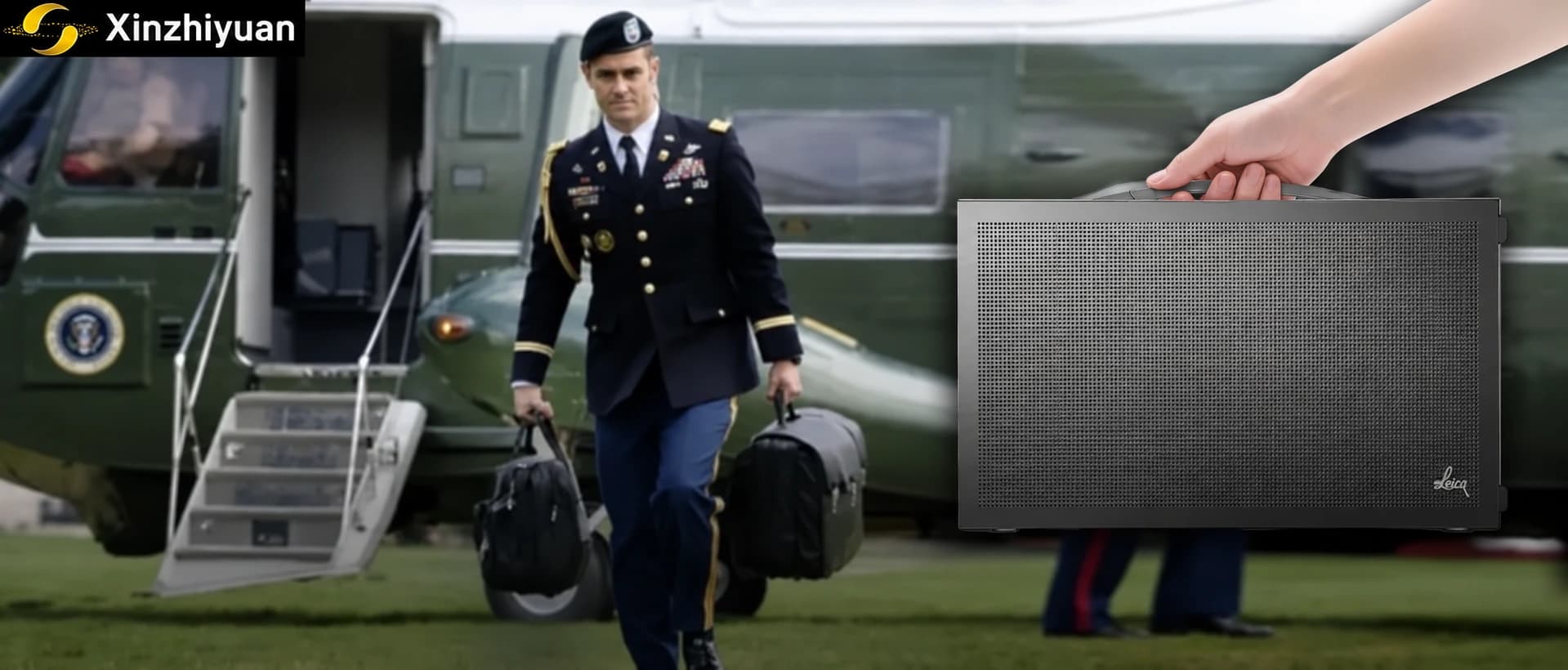
An Executive Briefcase for Every CEO, for RMB 68,000
Xinzhiyuan reports on Zleap-D1, exploring CEO-focused information analysis, mobile use, local deployment, and multi-agent collaboration.

Media coverage
An Agent Appliance Built for CEOs: A Conversation with 302.AI Founder Jomy
Crossing interviews Jomy about enterprise AI through CEO information needs, local deployment, small-model engineering, and traceable knowledge retrieval.